Swiss Hotels, Hostels and Mountain Huts: What Each Accommodation Type Is Actually Like
Swiss accommodation spans CHF 50 hostel dorms to five-star Zermatt resorts—learn what a mountain hut stay actually involves, what half-board means and where families get the best value.
On prices: figures on this page were researched in September 2026 and are given as bands, not quotes. Swiss rail pass and mountain railway pricing is revised annually, so check the current fare before you book.
Swiss Hotels, Hostels and Mountain Huts: What Each Accommodation Type is Actually Like
A dorm bed in a Swiss hostel runs CHF 35 to CHF 55 a night. That is the floor. A mountain hut dormitory with shared mattresses and mandatory sleeping bag liners runs CHF 80 to CHF 130 half board for non members. A three star double in Zurich hits CHF 180 to CHF 300 in July. The real difference between Switzerland hotels, hostels and mountain huts is not about cleanliness or scenery. It is about what each actually costs you in money, time and freedom. Each tier solves a different problem, and each has a hidden price you need to know before you book.
Swiss Hostel Dorm Prices: the Real Cost of a Budget Bed
What the Schweizer Jugendherbergen Network Charges
Swiss hostel dorm prices start at CHF 35 a night for a bed in a 4 to 6 bed room and go to CHF 55. That is the Schweizer Jugendherbergen network, the Auberges de Jeunesse Suisses. Breakfast is included at every hostel in that network. A standalone Swiss breakfast anywhere costs CHF 15 to CHF 25, so the inclusion is genuine value. The catch is the non member surcharge of CHF 7 per person per night added to the 2025 rate. Stay five nights and that surcharge is CHF 35. An individual annual membership costs CHF 33. Buy the membership before your first booking and the surcharge disappears.
Private Rooms and the Location Tradeoff
Private double rooms in the same hostels run CHF 90 to CHF 140 per room per night. That undercuts a mid range hotel but still lands above CHF 100 a night for a couple. The limitation is location. Most youth hostels sit in town centres or near train stations, not on the slopes. You pay for the bed, not for the view.
.jpg)
Swiss Mountain Hut Experience: Dormitories, Curfews and Sunrise
How the Dormitory Works
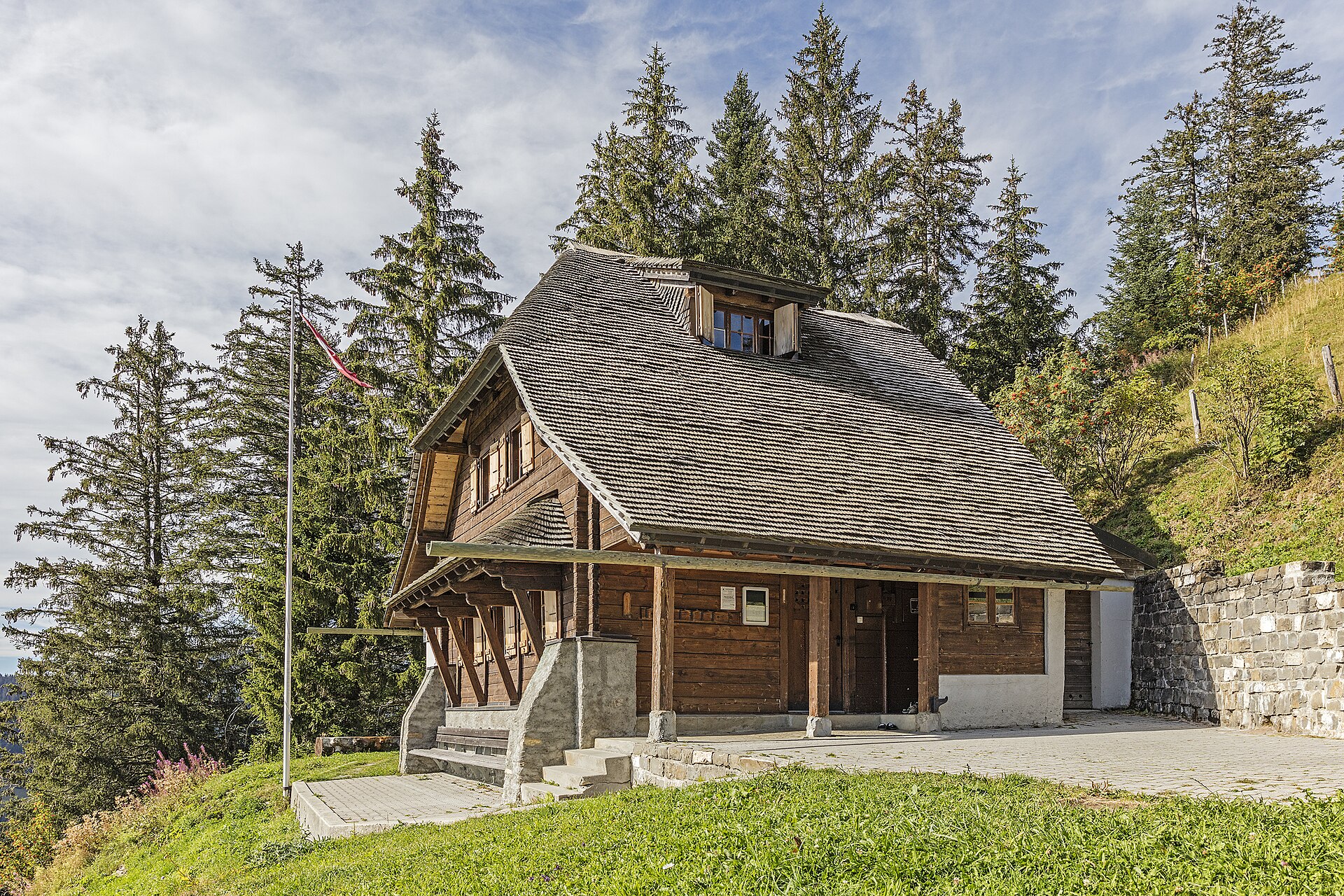
The Swiss mountain hut experience is the opposite of a hotel. You sleep in a Matratzenlager, a shared mattress dormitory, with blankets provided. Bring your own sleeping bag liner or rent one at the hut for CHF 5 to CHF 10. Half board means dinner, the overnight stay and breakfast, priced at CHF 70 to CHF 110 per person for SAC members in 2025. Non members pay a surcharge of CHF 12 to CHF 20 per night, so the total lands at CHF 80 to CHF 130. That rate buys you a dinner hauled up by cable car or helicopter and a sunrise over the Aletsch Glacier or the Matterhorn that no five star resort in Zermatt can replicate.
Rules, Reservations and Payment
The tradeoff is a curfew. Dinner is served at a fixed time. Lights out is early. You share the dormitory with strangers. Cancellation requires 48 hours notice and no shows get invoiced, so treat the reservation seriously. Reservations for July and August weekends require 2 to 6 months lead time. Card acceptance varies. Carry cash in Swiss francs. The hut keeper does not have a card terminal.
Zermatt Five Star Hotels: Hong Kong Prices Without the Sea
The Peak Season Rate
Zermatt five star hotels charge the same bracket as Hong Kong luxury properties. A double room in a five star resort in Zermatt or St. Moritz runs CHF 600 to CHF 1,200 per night in peak season. You pay for the car free village, the Matterhorn panorama from your window and ski in ski out access to the lifts. The downside is eating out. Dinner in Zermatt for two with a bottle of wine lands at CHF 100 to CHF 200, and the quality rarely matches the price.
Why Half Board Fixes the Equation
Half board becomes the smarter option here. Half board in Swiss resort hotels includes overnight stay, breakfast and an evening meal of 3 to 5 courses. The price difference versus room only runs CHF 25 to CHF 50 per person per night. That is cheaper than booking three courses a la carte. In Zermatt, that gap is even wider. Book half board in any 3 or 4 star property in Graubünden, Valais or the Bernese Oberland. In a five star property, confirm whether the half board menu rotates and whether dietary restrictions are handled without extra charge.
Chalet Style Accommodation Switzerland: What it Actually Means
What A Swiss Chalet Is Not
A chalet style accommodation Switzerland listing on a booking site does not mean an entire house to yourself. In Switzerland, chalet style describes architecture: exposed wood, gabled roofs, window boxes. Most rooms labelled chalet style sit inside a larger building that shares a hall, a staircase and a dining room with other guests.
Standalone Chalets and the Gasthaus Alternative
A true standalone chalet rented by the week in a resort village like Wengen or Grindelwald costs CHF 1,500 to CHF 3,500 per week for a family of four in peak season. It includes a kitchen, so you can cook your own meals and avoid restaurant prices. The downside is the cleaning fee and the deposit. Both can add CHF 200 to CHF 500 to the booking. The real chalet value comes from a family run Gasthaus that looks like a chalet but operates as a small hotel. A double room with a shared bathroom in such a property costs CHF 90 to CHF 150 per night in 2025. Dinner in the ground floor restaurant serves regional cuisine at CHF 20 to CHF 35 for a main course. That is half the price of a resort hotel restaurant.
Family Rooms in the Swiss Alps: Size, Configurations and Cost
What a Genuine Family Room Looks Like
Family rooms in Swiss Alps hotels are not standard double rooms with an extra bed folded in. A genuine family room sleeps four and includes a separate area for children with bunk beds or a second sleeping alcove. In a 3 or 4 star resort hotel in Grindelwald or Wengen, expect to pay CHF 200 to CHF 350 per night in peak season for a family room. The same configuration in a Schweizer Jugendherberge hostel costs CHF 130 to CHF 180 per room.
The Tourist Tax and the Guest Card That Pays It Back
The trick is the tourist tax, or Kurtaxe, charged per person per night. It ranges from CHF 2.00 to CHF 7.00 per person. In most municipalities children are discounted or exempt. Check the fine print before you book. The guest card issued by the local tourist office at check in covers free local bus and postbus travel within a defined zone and discounts of 10 to 30 percent on mountain railways and cable cars. In Wengen, that card covers the car free village shuttle. In Zermatt, it covers the local lifts. A family of four saving 20 percent on the Gornergrat Railway or the Jungfrau access tickets makes the tourist tax look like a rounding error.

| Feature | Hostel Dorm | Mountain Hut Dorm | Resort Hotel Double |
|---|---|---|---|
| Price per night 2025 | CHF 35-55 dorm bed | CHF 80-130 half board non member | CHF 180-300 3 star July |
| Breakfast | Included | Included in half board | Included CHF 15-25 value |
| Bathroom | Shared | Shared, basic | Private ensuite |
| Reservation lead time July August | 1-3 months | 2-6 months | 4-8 months resorts |
| Cash requirement | Card accepted | Cash preferred | Card accepted |
| Mountain viewpoint from door | No | Yes | Depends on property |
| Curfew or meal schedule | No | Fixed dinner time | No |
| Best for | Solo budget travellers | Hikers sunrise seekers | Couples families luxury |
Half Board Versus a La Carte and Why Swiss Breakfast Justifies Inclusion
The Economics Of Half Board
Half board in Swiss resort hotels covers overnight stay, breakfast and an evening meal of 3 to 5 courses. The price difference compared to room only runs CHF 25 to CHF 50 per person per night. A single main course in a resort town like Zermatt or St. Moritz costs CHF 30 to CHF 45. Adding a starter and a dessert pushes a two person dinner past CHF 100. Half board saves you CHF 20 to CHF 40 per person per night. It also eliminates the search for a restaurant that is open. Sundays and public holidays shut down many village eateries. The constraint is the menu. You eat what the hotel serves that evening, a set menu with one or two choices per course. If you want the freedom to eat at a different restaurant every night, book room only and budget CHF 60 to CHF 90 per person for dinner.
Why The Swiss Breakfast Is Worth Having
The Swiss breakfast included in hotel and hostel rates is not a continental tray of bread and jam. It is Birchermüesli, the original soaked oats breakfast invented in Zurich, plus a spread of local cheeses, cold cuts, boiled eggs, fresh bread, butter and preserves. Coffee is served from a pot. Orange juice comes in a glass. A standalone breakfast at a Zurich cafe costs CHF 15 to CHF 25. If your hotel breakfast costs CHF 20 to CHF 30 as an add on, pay it. If it is included in the room rate, that rate is effectively CHF 20 cheaper than the same room without breakfast. Do not skip it to save time. The breakfast room is where you get advice from the hotel staff on trail conditions, lift opening times and the weather for the day.
What to Do Next: Book the Accommodation That Matches Your Day, Not Your Fantasy
Decide what your day actually looks like before you choose where to sleep. Wake before sunrise and hike until sunset? A mountain hut saves you the descent and the ascent the next morning. The shared dormitory is just a place to rest, not a feature to evaluate. Travelling with children and need a guaranteed private bathroom and a reliable evening meal by 18:00? Book a family room in a 3 or 4 star resort hotel in Wengen or Grindelwald and add half board. On a strict budget? Accept that even a CHF 50 dorm bed is the floor. Buy the CHF 33 hostel membership and use the included breakfast and the hostel kitchen for your evening meal. Zurich three star double rooms cost CHF 150 to CHF 250 in February and CHF 180 to CHF 300 in July. St. Moritz and Zermatt five star properties charge Hong Kong luxury hotel prices, and the half board upgrade is the one that makes that rate defensible. The decision is not about which one is better. It is about which one stops costing you money for things you do not need.
Common Questions
Do mountain huts have private rooms?
Most SAC mountain huts do not offer private rooms. The standard is a shared mattress dormitory with blankets provided. Some larger huts have small private cubicles, but availability is limited and must be requested months in advance.
Can I use a hostel without a membership?
Yes, but a non member surcharge of CHF 7 per person per night applies at Schweizer Jugendherbergen properties. The individual annual membership costs CHF 33, so four nights or more make membership the cheaper option.
Are Swiss hotels cheaper if I book directly?
Direct booking on a hotel's own website includes the guest card benefits and local discounts that third party sites exclude. Compare rates, but the direct channel frequently matches or undercuts OTA prices.
What is the minimum age for a hostel dorm?
The minimum age without a guardian varies by hostel but is 14 to 16 years. Families with younger children should book a private room, which most Jugendherbergen offer at CHF 90 to CHF 140 per night.
Read next
-
 Switzerland eSIM for Hong Kong Travellers and Which Network Actually Works in the Alps
Hong Kong travellers need a Switzerland eSIM that holds signal above 2,000 metres. Swisscom is the only network with true alpine coverage—here is where to buy it and where it still fails.
Switzerland eSIM for Hong Kong Travellers and Which Network Actually Works in the Alps
Hong Kong travellers need a Switzerland eSIM that holds signal above 2,000 metres. Swisscom is the only network with true alpine coverage—here is where to buy it and where it still fails.
-
 Switzerland Where to Stay Choosing Your Base for Mountains and Cities
Choose two or three Swiss bases maximum to avoid wasting half-days on mountain transfers—compare Wengen, Lucerne, Zermatt, Grindelwald and Interlaken for families, hikers and first-time visitors.
Switzerland Where to Stay Choosing Your Base for Mountains and Cities
Choose two or three Swiss bases maximum to avoid wasting half-days on mountain transfers—compare Wengen, Lucerne, Zermatt, Grindelwald and Interlaken for families, hikers and first-time visitors.
-
 Switzerland Flights from Hong Kong Direct and Connecting Options Compared
Direct Cathay Pacific and Swiss flights from Hong Kong to Zurich take 12 hours 40 minutes, while Geneva requires a connection—compare fares, seasons and what each route costs in HKD.
Switzerland Flights from Hong Kong Direct and Connecting Options Compared
Direct Cathay Pacific and Swiss flights from Hong Kong to Zurich take 12 hours 40 minutes, while Geneva requires a connection—compare fares, seasons and what each route costs in HKD.
-
 Top Destinations in Switzerland: A Tour of the Must-See Places
Switzerland may be small, but every corner has its own character, from cosmopolitan lakeside cities to car-free mountain villages and Italian-flavoured southern towns. This tour runs through the destinations most Hong Kong travellers put at the top of their list, with a sense of what each offers and
Top Destinations in Switzerland: A Tour of the Must-See Places
Switzerland may be small, but every corner has its own character, from cosmopolitan lakeside cities to car-free mountain villages and Italian-flavoured southern towns. This tour runs through the destinations most Hong Kong travellers put at the top of their list, with a sense of what each offers and
-
 Switzerland in Winter vs Summer: Which Season Should You Choose?
Switzerland is one of those rare destinations that reinvents itself completely with the turning of the seasons. Visit in January and you find a hushed, snow-blanketed wonderland of ski slopes and steaming mountain restaurants. Return in July and the same valleys are green and buzzing, laced with wil
Switzerland in Winter vs Summer: Which Season Should You Choose?
Switzerland is one of those rare destinations that reinvents itself completely with the turning of the seasons. Visit in January and you find a hushed, snow-blanketed wonderland of ski slopes and steaming mountain restaurants. Return in July and the same valleys are green and buzzing, laced with wil
-
 The Swiss Travel Pass Explained: Is It Worth It for Hong Kong Travellers?
Switzerland has one of the most comprehensive and beautifully integrated public transport systems in the world. Trains, buses and boats run like clockwork and reach even remote mountain valleys, which means you can plan an entire holiday without ever renting a car. The challenge for visitors is not
The Swiss Travel Pass Explained: Is It Worth It for Hong Kong Travellers?
Switzerland has one of the most comprehensive and beautifully integrated public transport systems in the world. Trains, buses and boats run like clockwork and reach even remote mountain valleys, which means you can plan an entire holiday without ever renting a car. The challenge for visitors is not
-
 Bern
Bern is the Swiss capital most first-time itineraries skip. The UNESCO arcades, river bears, and 56-minute Zurich train make it the best rain-day city in Switzerland.
Bern
Bern is the Swiss capital most first-time itineraries skip. The UNESCO arcades, river bears, and 56-minute Zurich train make it the best rain-day city in Switzerland.
-
 Lucerne or Interlaken Where to Put Your One Mountain Base
-
 Swiss Travel Pass or Half Fare Card Which Pays for Your Trip
Swiss Travel Pass or Half Fare Card? This cost comparison for Hong Kong travellers breaks down which pass pays for itself on mountain railways, lake boats, and intercity trains.
Swiss Travel Pass or Half Fare Card Which Pays for Your Trip
Swiss Travel Pass or Half Fare Card? This cost comparison for Hong Kong travellers breaks down which pass pays for itself on mountain railways, lake boats, and intercity trains.