The Case for Stopping in Bern the Swiss Capital That Most Itineraries Skip
Bern is the Swiss capital most first-time itineraries skip. The UNESCO arcades, river bears, and 56-minute Zurich train make it the best rain-day city in Switzerland.
- Flag
-
- ISO code
- CH
- Currency
- CHF
On prices: figures on this page were researched in September 2026 and are given as bands, not quotes. Swiss rail pass and mountain railway pricing is revised annually, so check the current fare before you book.
Why You Should Stop in Bern
You are building a first-time Switzerland itinerary and every guide tells you to hit Lucerne, Interlaken, and Zermatt. Bern does not appear. That omission is the best reason to correct it. A 56-minute train from Zurich deposits you in a UNESCO Old Town where six kilometres of sandstone shopping galleries shelter you from rain, the Aare River loops turquoise around a medieval grid, and the Zytglogge clock tower still strikes the hour with mechanics from 1530. Bern is the single best Swiss city for a rain-day alternative when mountain views are socked in. The walk-up fare from Zurich makes it criminally easy to add.
Bern is the Swiss Capital Most Itineraries Skip Because of a Train Station
Why Everyone Changes Trains and Nobody Exits
Look at the Swiss rail map. The main north-south axis runs from Zurich through Bern to Brig, then splits toward the Bernese Oberland and the Valais resorts. Most travellers board an InterCity at Zurich HB, change at Bern for the connecting train to Interlaken Ost, and never leave the platform. That 50-to-55-minute connection from Bern to Interlaken Ost feels like a transit inconvenience, so they assume Bern is a transfer point, not a destination. It is a mistake that costs you a city that works better than any Alpine resort on a grey afternoon.
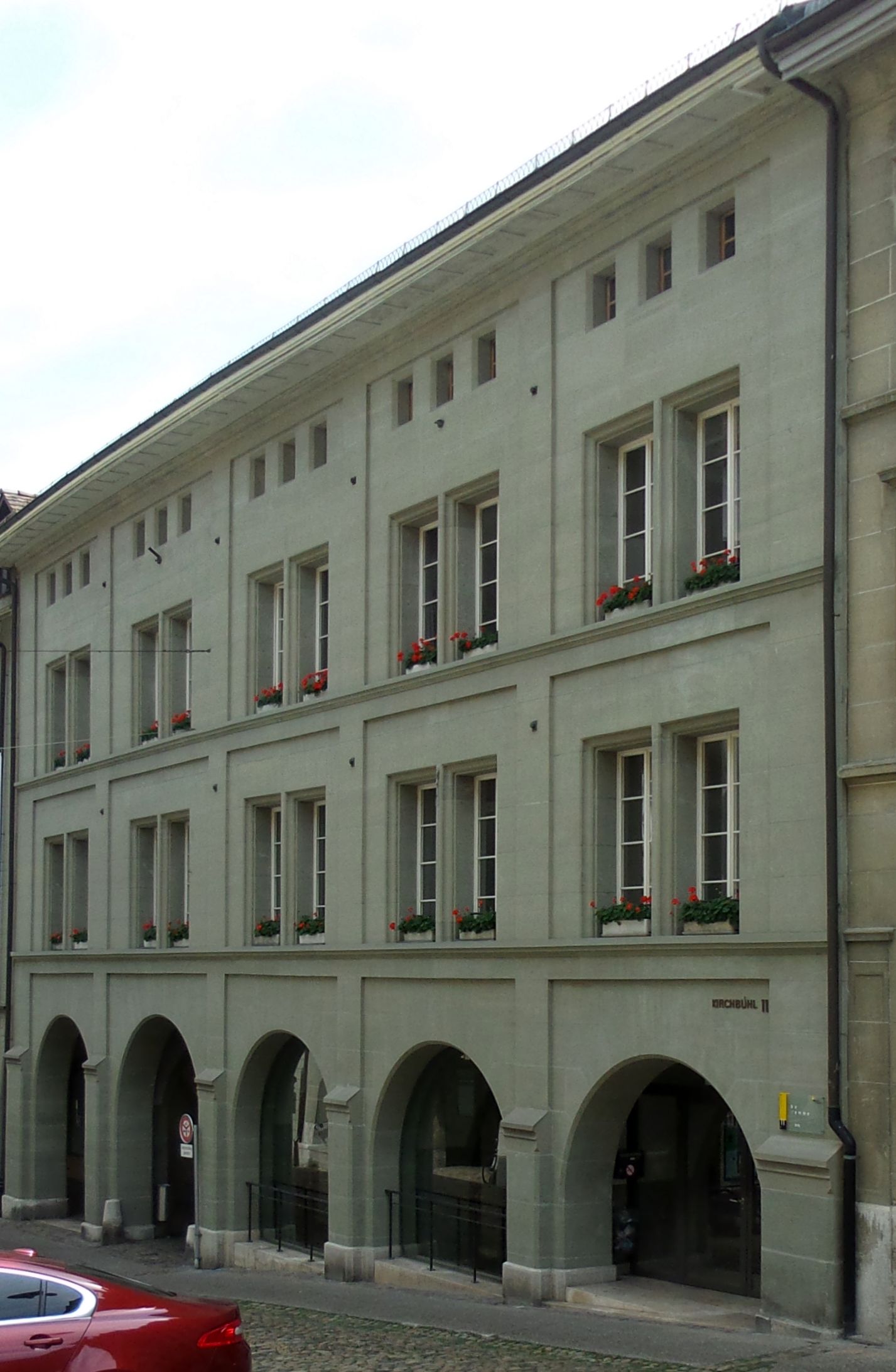
Bern sits at 542 metres. It is not a mountain town. It is a federal city, de facto capital of a country that has no de jure capital, and its old town was inscribed on the UNESCO list in 1983 as reference number 267. The sandstone arcades, known locally as Lauben, stretch for six kilometres along the major streets, Kramgasse above the rest. They are covered shopping walkways built four centuries before modern rain gear. On the day rain pins you to street level, walk from the Zytglogge to the Bundeshaus without opening an umbrella.
The Clock Tower That Has Run for Half a Millennium
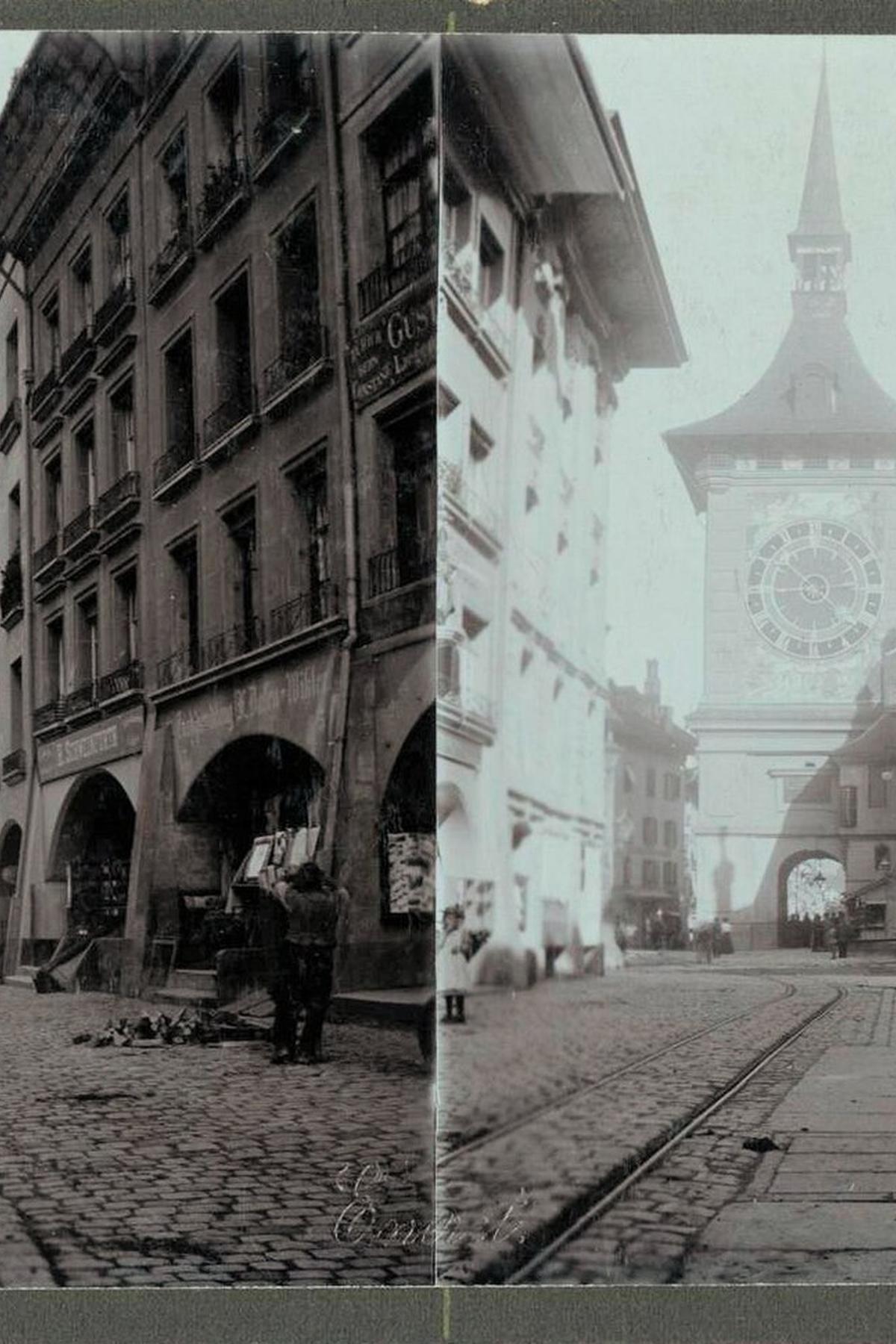
The clock tower itself was first documented as a city gate between 1218 and 1220. Its astronomical clock was installed in 1530 by Kaspar Brunner. Four minutes before each hour, mechanical figures rotate through a miniature performance that has run continuously for nearly 500 years. The tower marks the eastern end of Kramgasse, the main artery of the old town, where eleven fountain statues stand in a row, each one a 16th-century allegory carved from local stone. Arrive on a Sunday when most Swiss city centres are dead. The old town still operates as a public space, not a shopping mall, because the covered walkways function as paths between neighbourhoods, not retail corridors.

Bern Old Town: a UNESCO World Heritage Site That Functions
Most UNESCO old towns feel like open-air museums where no one actually lives. Bern does not. The medieval grid plan laid out in 1191 remains the working floor plan for a city of working people. The arcaded ground floors contain bakeries, bookshops, bike repair shops, and the occasional high-end watch boutique, but the residential floors above are where people raise children. The difference matters. Bern is a living city, not a tourist stage set, which means the prices in the Kramgasse cafes are normal Swiss prices, not resort markups. A coffee under the galleries costs what it costs at Zurich HB, not what it costs on the Jungfraujoch.
Swim the Aare Like a Local
The Aare River wraps the old town in a tight meander on three sides. In summer, June through September, the locals swim it. Entry is at Schönausteg; you drift downstream to Marzili in roughly fifteen to twenty minutes. Water temperature runs 18 to 22 degrees Celsius. No lifeguard. No supervision. No rental gear. You bring a waterproof bag and you know your swimming ability. Travelling with teenagers who need to move after museum hours? The Aare swim is the cheapest adrenaline in Switzerland and it costs nothing.
Bern Bears, Zytglogge and Bear Park: a Free Attraction on the Aare Bank
The Bear Park opened in 2009 on a 6,000-square-metre sloping site down to the Aare. Three Eurasian brown bears live on the slope, visible from a raised walkway that costs nothing to enter. The park replaced the old bear pit, a cramped 19th-century enclosure that had held bears since 1441. The new design gives the animals space to climb, swim, and hide. That is not the sort of thing you expect from a free municipal attraction. Compare this to the return ticket for a Jungfraujoch excursion and the value proposition shifts fast.
Bern has carried a bear in its coat of arms since at least the 13th century. The live bears below the rose garden are the city's living emblem, and the Rosengarten above the park provides the single best view across the old town. Walk up the cobbled path from the Bear Park entrance, turn around at the rose terrace, and you see the entire UNESCO district, the Aare loop, and the Münster platform all in one frame. The view works best at 08:30 on a summer morning, before the tour groups arrive from the Bernese Oberland.
Bern Day Trip from Zurich: Why 56 Minutes Each Way Changes Your Itinerary
The Train That Makes It a Commute
The direct InterCity train from Zurich Flughafen to Bern runs twice per hour. Travel time is 1 hour 10 minutes to 1 hour 20 minutes from the airport, 56 minutes from Zurich HB. The SBB trains are punctual, quiet, and equipped with free Wi-Fi that works through the tunnels under the Swiss Mittelland. Leave Zurich in the morning, spend the day walking the covered galleries, visit the Zytglogge, drop by the Bear Park, walk the Aare bank, and board a train back to Zurich before dinner. A half-day Bern itinerary covers the old town, the bears, and the river bank. Adding the Zentrum Paul Klee, designed by Renzo Piano and opened in 2005, adds two hours. Admission is set by the museum; check the official site before you go.
What the Day Costs
The practical question is whether to buy a point-to-point ticket or use a Swiss Travel Pass. If you hold a Swiss Travel Pass, the Bern day trip costs nothing extra beyond the pass purchase. If you pay as you go, the one-way fare from Zurich HB is set by SBB and changes with demand; check sbb.ch for the current price. Round trip runs roughly double that. For a family of four the total is less than the minimum dinner bill for four at a mid-range Zurich restaurant where a main course alone runs CHF 35. The question is not whether you can afford Bern. The question is whether you can afford to eat in Zurich twice.

Bern Things to Do: a Walking Route That Takes One Morning
Exit Bern main station through the western portal onto the Münster platform. The Münster, the late Gothic cathedral with the tallest spire in Switzerland, holds the entrance to the platform that gives you a first elevation view. From the Münster platform, walk east along the Aare bank toward the Bear Park, passing under the Nydeggbrücke. Visit the bears, climb to the Rosengarten, then descend back into the old town via Junkerngasse, the quieter of the two main east-west streets. Cross to Kramgasse at the Zytglogge, walk west under the arcades toward the Bundeshaus, and end at the Bärenplatz tram stop.
You have just seen the entire UNESCO Old Town, the bears, the river, the clock tower, the parliament building, and the covered-walkway system that defines this city. Total walking time: 90 minutes without stops. Add lunch under the galleries on Kramgasse and one visit to the Zytglogge at the hour change and you have spent half a day. Rain cancelled your mountain plans? This route replaces a day at 2,000 metres with a day at 542 metres that costs a fraction of the gondola ticket.
What Bern is Bad at and Who Should Skip it
Bern is not a nightlife city. Bars close by midnight. Clubs are rare. The night-market energy of Zurich's Niederdorf or the lakefront buzz of Montreux does not exist here. Spontaneous party seekers will find Bern frustrating. The city also lacks the direct Alpine drama of Interlaken or Grindelwald. You cannot see the Eiger from the old town. If your primary goal is to photograph sharp mountain peaks every day, Bern will feel like a flat pause between verticals. Budget backpackers will struggle too. Even a hostel dorm in Bern runs above CHF 50 per bed. A simple lunch in a restaurant exceeds CHF 25. The value equation does not favour the traveller who counts every franc.
Multi-generational families, serious hikers needing a rain-day Plan B, first-time Europe visitors who value order and cleanliness, and rail enthusiasts chasing the Swiss Travel System will find Bern the most practical refit in a crowded itinerary. It is the capital nobody visits on a first trip. That is precisely why it works.
Places in Bern
Common Questions
Why do most Switzerland itineraries skip Bern?
Because Bern sits on the Zurich to Interlaken railway line. Most travellers change trains at Bern station without exiting. The station is a hub, not a terminus, so the path of least resistance leads through the platform tunnel and onto the Interlaken train. The city never gets a chance to show itself.
How long does the Bern day trip take from Zurich?
The direct train from Zurich HB runs 56 minutes each way. Depart early, spend four to five hours walking the old town and Bear Park, and return by 17:00. Total commitment: under seven hours door to door.
What does a half day in Bern cost?
The train ticket price varies; check SBB for the current one-way fare from Zurich HB. Bear Park is free. The Zytglogge can be viewed from the street for free. Lunch under the covered galleries runs CHF 20 to CHF 30. Total per person is modest without a Swiss Travel Pass.
Is Bern worth visiting on a rainy day?
Yes. The six kilometres of sandstone arcades provide covered walking paths across the entire old town. You can spend four hours in Bern without getting wet. No other Swiss city offers that coverage at this scale.
Can I visit Bern and Interlaken in the same day?
Yes, but it is a long day. The train from Bern to Interlaken Ost takes 50 to 55 minutes. You could start in Zurich, stop in Bern for four hours, continue to Interlaken for two hours, and return to Zurich by 20:00. You will cover ground but you will not see either city properly.
Read next
-
 Interlaken
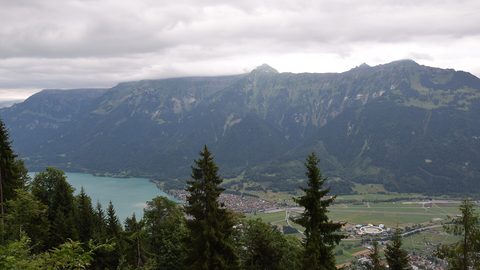
 is not a charming Swiss village—it is a flat adventure-sports base between two lakes. Here is who should stay here and who should decamp to Wengen or Grindelwald instead.
Interlaken
Interlaken is not a charming Swiss village—it is a flat adventure-sports base between two lakes. Here is who should stay here and who should decamp to Wengen or Grindelwald instead.
-
 Switzerland eSIM for Hong Kong Travellers and Which Network Actually Works in the Alps
Hong Kong travellers need a Switzerland eSIM that holds signal above 2,000 metres. Swisscom is the only network with true alpine coverage—here is where to buy it and where it still fails.
Switzerland eSIM for Hong Kong Travellers and Which Network Actually Works in the Alps
Hong Kong travellers need a Switzerland eSIM that holds signal above 2,000 metres. Swisscom is the only network with true alpine coverage—here is where to buy it and where it still fails.
-
 Switzerland Hotels Hostels and Mountain Huts What Each Is Actually Like
Swiss accommodation spans CHF 50 hostel dorms to five-star Zermatt resorts—learn what a mountain hut stay actually involves, what half-board means and where families get the best value.
Switzerland Hotels Hostels and Mountain Huts What Each Is Actually Like
Swiss accommodation spans CHF 50 hostel dorms to five-star Zermatt resorts—learn what a mountain hut stay actually involves, what half-board means and where families get the best value.
-
 Switzerland Where to Stay Choosing Your Base for Mountains and Cities
Choose two or three Swiss bases maximum to avoid wasting half-days on mountain transfers—compare Wengen, Lucerne, Zermatt, Grindelwald and Interlaken for families, hikers and first-time visitors.
Switzerland Where to Stay Choosing Your Base for Mountains and Cities
Choose two or three Swiss bases maximum to avoid wasting half-days on mountain transfers—compare Wengen, Lucerne, Zermatt, Grindelwald and Interlaken for families, hikers and first-time visitors.
-
 Switzerland Flights from Hong Kong Direct and Connecting Options Compared
Direct Cathay Pacific and Swiss flights from Hong Kong to Zurich take 12 hours 40 minutes, while Geneva requires a connection—compare fares, seasons and what each route costs in HKD.
Switzerland Flights from Hong Kong Direct and Connecting Options Compared
Direct Cathay Pacific and Swiss flights from Hong Kong to Zurich take 12 hours 40 minutes, while Geneva requires a connection—compare fares, seasons and what each route costs in HKD.
-
 Top Destinations in Switzerland: A Tour of the Must-See Places
Switzerland may be small, but every corner has its own character, from cosmopolitan lakeside cities to car-free mountain villages and Italian-flavoured southern towns. This tour runs through the destinations most Hong Kong travellers put at the top of their list, with a sense of what each offers and
Top Destinations in Switzerland: A Tour of the Must-See Places
Switzerland may be small, but every corner has its own character, from cosmopolitan lakeside cities to car-free mountain villages and Italian-flavoured southern towns. This tour runs through the destinations most Hong Kong travellers put at the top of their list, with a sense of what each offers and
-
 Switzerland in Winter vs Summer: Which Season Should You Choose?
Switzerland is one of those rare destinations that reinvents itself completely with the turning of the seasons. Visit in January and you find a hushed, snow-blanketed wonderland of ski slopes and steaming mountain restaurants. Return in July and the same valleys are green and buzzing, laced with wil
Switzerland in Winter vs Summer: Which Season Should You Choose?
Switzerland is one of those rare destinations that reinvents itself completely with the turning of the seasons. Visit in January and you find a hushed, snow-blanketed wonderland of ski slopes and steaming mountain restaurants. Return in July and the same valleys are green and buzzing, laced with wil
-
 Riding the Glacier Express and Switzerland's Great Scenic Trains
There are countries where the train is simply a way to get from one place to another. Switzerland is not one of them. Here, the railway is the destination in its own right, a slow-moving grandstand seat for some of the most spectacular scenery in Europe. For Hong Kong travellers used to fast, effici
Riding the Glacier Express and Switzerland's Great Scenic Trains
There are countries where the train is simply a way to get from one place to another. Switzerland is not one of them. Here, the railway is the destination in its own right, a slow-moving grandstand seat for some of the most spectacular scenery in Europe. For Hong Kong travellers used to fast, effici
-
 The Swiss Lakes Guide: Cruises, Lakeside Towns and Where to Dive In
Switzerland is a country of mountains, but it is also, gloriously, a country of water. Scattered across the map are lakes of every size and character, from vast, glamorous expanses fringed by vineyards to quiet mountain waters the colour of jade. They are the soul of many of the country's most belov
The Swiss Lakes Guide: Cruises, Lakeside Towns and Where to Dive In
Switzerland is a country of mountains, but it is also, gloriously, a country of water. Scattered across the map are lakes of every size and character, from vast, glamorous expanses fringed by vineyards to quiet mountain waters the colour of jade. They are the soul of many of the country's most belov