Where to Base Yourself in Switzerland and How Many Bases You Actually Need
Choose two or three Swiss bases maximum to avoid wasting half-days on mountain transfers—compare Wengen, Lucerne, Zermatt, Grindelwald and Interlaken for families, hikers and first-time visitors.
Where to Base Yourself in Switzerland: the One Decision That Saves Your Trip
You need two bases, not five. Switzerland where to stay is not a choice of scenic towns; it is a logistics decision that determines whether you spend your holiday watching mountains from a train window or standing on them. The single most common mistake is trying to cover Zurich, Lucerne, Interlaken, Zermatt and Geneva in seven days. The train network is fast. Mountain transfers eat half days. Packing and unpacking every second day costs you morning light and afternoon sun. Two bases, maximum three, solves all of that.
The first base should be a lake town with a rail hub, the second a car-free mountain village. That pairing lets you see low-altitude and high-altitude Switzerland without crossing your own path. Interlaken sits between both worlds and looks like the perfect middle option. It is not. Interlaken is a functional transport node where adventure sports operators cluster and souvenir shops line the main street. It works if you only need a bed between paragliding flights, but its nightly rate buys you a view of the hotel across the street, not the Eiger. Choose an actual village instead.

How Many Bases You Actually Need, and Why Three is the Hard Limit
Why One Base Fails for Most Trips
Five full days is the minimum for a Hong Kong traveller to justify the 12-hour flight and the daily baseline cost, which runs from CHF 80 to CHF 120 per person depending on the season and your accommodation choices. Within those five days, one base works only if you are happy with a 2-hour to 2-hour-30-minute day-trip radius each way by rail. That radius covers Lucerne to Interlaken and Lucerne to Zurich. It does not reach Zermatt or the Jungfrau region without a punishing return journey.
Two bases gives you the whole country. The smart split is Luzern or Interlaken as the first base, then Zermatt or a Grisons location like St. Moritz, Pontresina, Davos or Klosters as the second. Three bases works for a trip of eight days or more: Lucerne, then a mountain village in the Jungfrau region, then Zermatt. Never move nightly. Every move consumes a Swiss Travel Pass day on transit and loses you the hours between check-out at 10:00 and check-in at 14:00 or 15:00. Those are the best hiking hours of the day.
The Swiss Travel Pass and Your Base
The Swiss Travel Pass itself does not need explaining here, but what matters for your base choice is that the pass covers unlimited rail, lake boats and city transport on consecutive days. A pass that covers the whole trip pays for itself by day four. Buy it before departure from Klook or an SBB agent in Hong Kong.
Best Base for Jungfrau Region: Wengen or Grindelwald
The Jungfrau region demands a car-free settlement as your base. The research settles this: Wengen is a family-friendly spot with Jungfrau views and quiet nights, reachable only by cogwheel train from Lauterbrunnen. Grindelwald has direct lift access and faces the Eiger north face directly, but it is busier and more exposed to day-tripper crowds.
Choose Wengen for Families and Quiet
Choose Wengen if you are travelling with children or if quiet matters. The absence of car traffic means children can move independently, and the place itself has everything a family needs: a Coop supermarket (check the opening hours; Sunday is a problem), hotel restaurants serving Älplermagronen and fondue, and a train station that connects to Kleine Scheidegg for Jungfraujoch access. The downside is that you pay for the quiet. Nightly rates in Wengen run higher than Grindelwald for equivalent room size, and the last train down matters if you miss it.
Choose Grindelwald for Direct Trail Access
Choose Grindelwald if your priority is skiing or hiking trail access. The Grindelwald Terminal gondola to the Eiger Glacier runs year-round and cuts 40 minutes off the journey to Jungfraujoch versus the Wengen route. Grindelwald also has more family apartments with kitchens, which helps when eating out every meal costs CHF 18 to CHF 30 for a simple lunch, set by the restaurant and rising with the altitude. The trade-off is noise: Grindelwald is a working resort town, not a silent hamlet.
Lauterbrunnen itself is not a base worth considering. It is the valley-floor transport hub where the train from Interlaken arrives and the cogwheel trains to Wengen and Mürren depart. Stay in the valley only if your budget absolutely demands it, then spend your days riding up to the villages anyway.
| Factor | Lake Town (Lucerne, Montreux) | Mountain Village (Wengen, Zermatt) |
|---|---|---|
| Elevation | Below 500 m | 1,200 m to 1,620 m |
| Microclimate | Milder, warmer at night | Cooler nights, higher snow reliability |
| Transport | Rail hub, boat connections | Car-free in some cases, cogwheel railway access |
| Day Trip Radius | 2 h to 2 h 30 min each way | Limited to adjacent valleys unless returning to valley floor |
| Nightly Rate | CHF 130 to CHF 300, depending on season and hotel category | CHF 180 to CHF 450, set by the municipality and hotel class |
| Best For | City sightseeing, lake promenades, lower-altitude walks | Alpine trails, ski-in/ski-out, Matterhorn views |
| Guest Card | Free local transport within municipality | Free local transport plus cable car discounts |
Lucerne or Interlaken as Base: the Clear Winner
For first-time visitors, the choice between Lucerne and Interlaken as base is not a toss-up. Lucerne wins. Interlaken is where you sleep before the early train to Lauterbrunnen, not where you spend the evening.
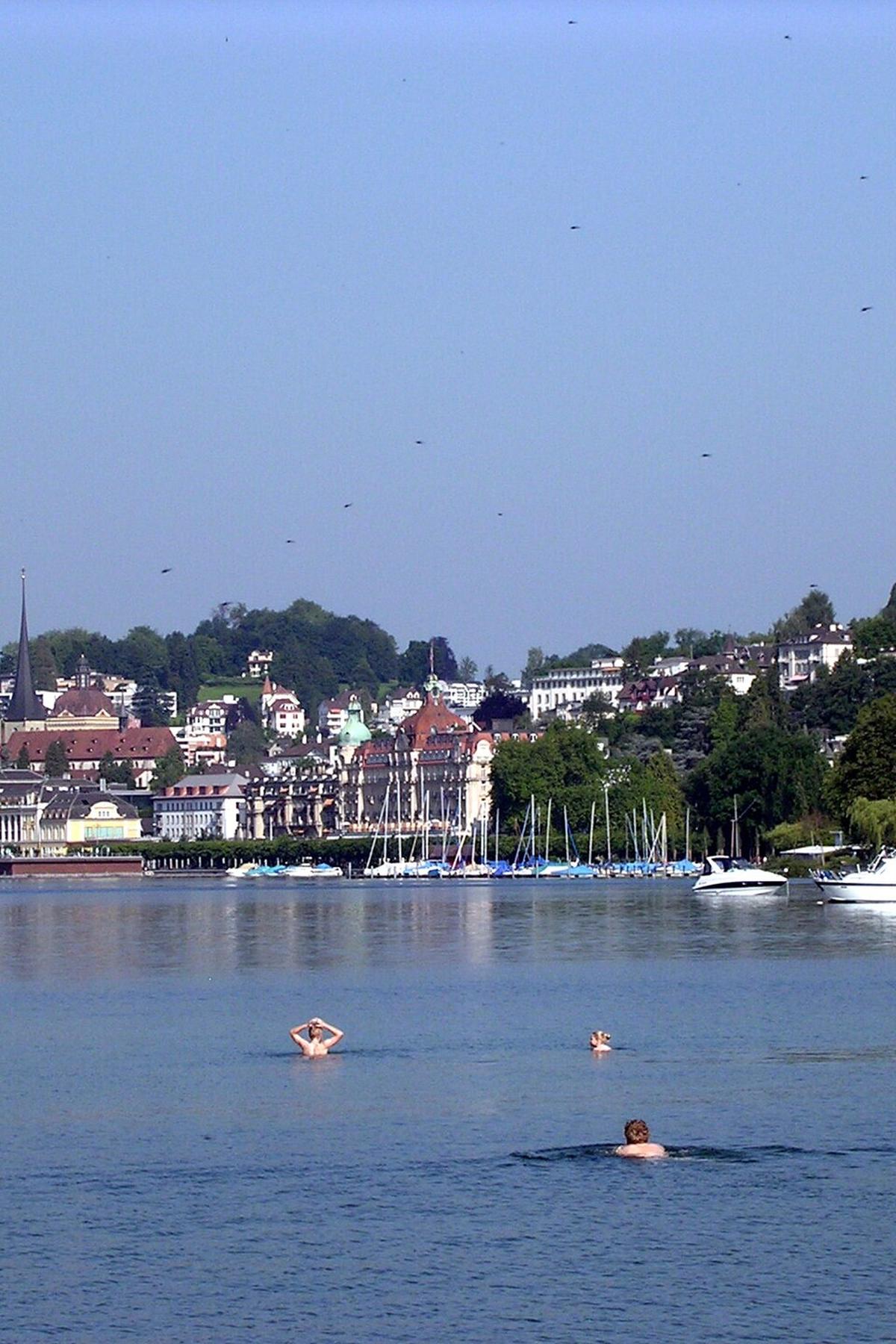
Lucerne Old Town gives you a proper evening: painted facades on the pedestrian streets, the Chapel Bridge lit after dark, a lakefront promenade that invites a slow walk after dinner. The train station is Luzern, a major rail hub with direct connections to Zurich HB in 45 minutes, Bern in 56 minutes, and Interlaken Ost in under two hours. The Swiss Travel Pass covers the lake boat to Vitznau for Mount Rigi, and the whole excursion is free with the pass. Restaurants charge CHF 18 to CHF 30 for lunch, the going rate across the region, but you can access the Migros supermarket at the train station until 18:30 weekdays and 17:00 Saturdays, with the station branch open Sunday when the city-centre supermarkets are locked.
Interlaken has one advantage: it sits at the junction of Lake Thun and Lake Brienz, giving you 20-minute access to Lauterbrunnen Valley. The Harder Kulm funicular gives a fast viewpoint. But the town itself has no character to speak of. The main street Hoheweg is a corridor of watch stores, souvenir shops and hotel frontages. The view of the Jungfrau from the park at the west end is the best thing about it, and you get that for free standing on the grass. Do not pay the Interlaken nightly rate to sleep in a transport hub.
If your trip is strictly about adventure sports, pick Interlaken. For every other traveller, Lucerne is the correct base.
Zermatt vs Wengen Accommodation: Which Mountain Village Suits Your Trip
Zermatt and Wengen share car-free status, Matterhorn-region adjacency and eye-watering prices. They serve different trips. Zermatt accommodation centres on the Matterhorn icon, and you pay for that view. Wengen accommodation gives you Jungfrau-region base-camp access at a slightly lower price point.
Zermatt: the Iconic Resort
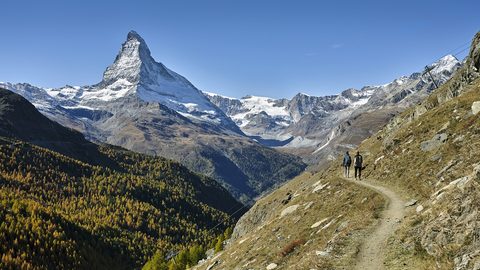
Zermatt is the more complete resort. You can arrive by train from Visp, step out onto the car-free main street, and walk to a hotel that faces the Matterhorn. The Gornergrat Railway leaves from the station and delivers the classic view in 33 minutes. The Matterhorn Glacier Paradise at 3,883 metres is the highest cable-car station in Europe. Zermatt has glamour: five-star hotels with spa wings, luxury watch boutiques, and a nightly rate that starts above CHF 200 even in shoulder season, set by the hotel and climbing steeply for a Matterhorn-facing room. The downside is that Zermatt is expensive for what you actually get in the room; a premium double with a balcony here buys a family apartment with a kitchen in Wengen.
Wengen: Quieter and Family-Oriented
Wengen is quieter, smaller and more family-oriented. The view is the Jungfrau itself, not the Matterhorn, and the settlement sits on a south-facing terrace above the Lauterbrunnen valley. Accommodation here divides between traditional hotel properties and family apartments registered with the municipality that trigger the guest card for free local transport. The Wengen guest card covers the train to Lauterbrunnen and the bus to Kleine Scheidegg, saving you money if you are moving around the valley daily.
Make the decision by activity: Zermatt for the Matterhorn and winter skiing, Wengen for summer hiking and family trips. If your budget allows only one mountain base, and you are a first-time visitor, Zermatt leaves a stronger visual memory.
How Many Nights in Each Swiss City: a Realistic Schedule
The minimum stays: two nights in a lake town, three nights in a mountain village. That gives you one full day for the lake-town area and two full days for the mountain trails. A five-night trip cannot span three bases; two bases is the maximum. A seven-night trip can use three nights in Lucerne, three nights in Wengen, and one transition night in Zermatt if the budget stretches.
Cities That Do Not Deserve a Night
Zurich does not need a full night. It is the arrival point. Land at Zurich Airport, take the 10-minute train to Zurich HB for CHF 6.80, and leave the same day for Lucerne. Save Zurich for your final morning if you have a late flight; the Niederdorf old-town alley and the lakefront walk fill two hours easily. Bern Old Town deserves a half-day, not a sleepover. Take the 56-minute train from Zurich, walk the UNESCO sandstone arcades, see the Zytglogge clock tower, and return to your base for the night.
Montreux: the Lake Geneva Option
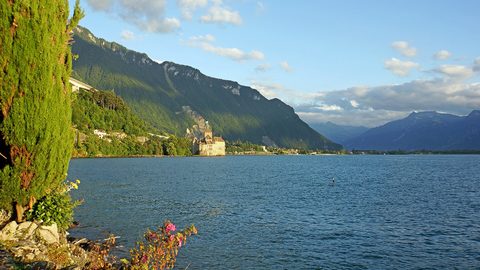
Montreux works as a two-night base if you want the Lake Geneva region. The lakefront promenade, Chillon Castle at CHF 12 to CHF 15 entry (check the castle website for the current rate), and the mild microclimate make it a reliable spring and autumn option. From Montreux you can day-trip to Gruyères in 1 hour 10 minutes for fondue in the town that gave the cheese its name. Nightly rates in Montreux sit below Zermatt and above Lucerne, but the value is in the setting.
.jpg)
Family Friendly Swiss Villages: Wengen, Mürren and the Car Free Advantage
Family-friendly Swiss villages share one characteristic: no cars. Wengen and Mürren are both car-free. Mürren sits higher at 1,650 metres, on the opposite side of the Lauterbrunnen valley from Wengen, and gives direct access to the Schilthorn Piz Gloria revolving restaurant from the James Bond film. Families choose Wengen for the wider choice of family apartments, the flat main street that children can navigate safely, and the playground at the edge of the forest.
What Makes a Village Work for Families
What makes a place genuinely family-friendly is not the chocolate-box charm but the practical details: a supermarket in walking distance, a medical clinic, a train station without stairs to the platform. Wengen has all three. The guest card given at check-in covers local transport within the municipality, so you do not buy separate tickets for the village bus. Book a family apartment with a kitchen to solve the Sunday supermarket problem. On Sunday the village shops close entirely, and the railway-station Migros in Lauterbrunnen is the nearest option. Stock up on Saturday before 17:00.
Grindelwald has more preschooler amenities than Wengen, including an indoor pool and a climbing wall, but it also has road traffic. For families with children old enough to ski, Grindelwald wins on direct lift access. For families who want to walk out the door and onto a trail without crossing a road, Wengen is the answer.
Montreux Plus Zermatt: the Lake and Peak Split for Repeat Visitors
If you have already seen the Jungfrau region, combine Montreux and Zermatt for a trip that contrasts Lake Geneva mildness with high-alpine drama. Montreux sits at lake level with a microclimate that supports palm trees and a promenade that runs for kilometres. Zermatt sits at 1,620 metres with the Matterhorn ridge visible from the main street. The contrast is the point of the pairing.
Three Nights in Montreux
Base yourself in Montreux for three nights. Day one covers Chillon Castle in the morning and the Lavaux Vineyards terraced slopes in the afternoon. Day two takes the train to Gruyères for fondue and cheese, 1 hour 10 minutes each way, or goes to the Abbey Library St. Gallen. Entry to the rococo interior is set by the Abbey and runs around CHF 15 to CHF 20; confirm the figure on their site before you go. Montreux restaurants serve Papet Vaudois, leek and potato stew with cabbage sausage, and the local market on Saturday morning offers Birchermüesli ingredients to stock your apartment kitchen.
The Train to Zermatt
Travel from Montreux to Zermatt via Visp, a journey of roughly 2 hours 30 minutes. The train climbs through the Rhone valley and enters the Mattertal gorge. Once in Zermatt, the car-free resort releases you from any need for transport. The Gornergrat Railway departure from the station platform gives the Matterhorn panorama. Book advance tickets for the Gornergrat in peak season; the 33-minute ride sells out by 09:00. The nightly rate in Zermatt for a hotel with a Matterhorn view starts at CHF 250 to CHF 350 in summer, depending on the hotel, and goes higher in winter.
What Nobody Tells You About Swiss Base Towns: the Frictions
The practical frustrations matter more than the views when choosing where to sleep. Sundays shut everything except railway-station supermarkets. The village Coop in Wengen closes at 18:30 on weekdays, 17:00 on Saturday, and not at all Sunday. If you arrive on a Sunday evening with no supplies, dinner is the hotel restaurant or nothing. Stock up before the weekend.
Cash, Cards and Hidden Costs
Public toilets cost CHF 1 to CHF 2 and require coins. Train-station facilities are your best option; use them before leaving the station. Restaurants serve tap water for free but staff expect you to order another drink alongside it. Do not ask for water without ordering at least a coffee.
Credit cards work everywhere except small farm shops and some mountain huts. Carry CHF 80 to CHF 120 in cash for these situations. The tourist tax of CHF 2 to CHF 6 per person per night appears on your bill automatically; it is not a scam, it is how the municipality funds the guest card that gives you free local transport. The guest card itself is a slip of paper the hotel issues at check-in; carry it to avoid buying local bus tickets.
Connectivity and Apps
Mobile data drops to zero in mountain valleys. Buy a Swisscom eSIM from Nomad or Airalo before leaving Hong Kong; Swisscom has the best alpine coverage. Install the SBB Mobile app before departure; it shows real-time platform changes that the station boards do not always update fast enough.
The Single Action That Determines Whether Your Swiss Trip Works
Book your accommodation based on the guest card and the train-station proximity. The guest card covers free local transport within the municipality, which saves CHF 8 to CHF 15 per day. The train station should be within a 10-minute walk of your hotel; mountain resorts tax your luggage uphill. Wengen station is at the centre. Zermatt station opens onto the main street. Lucerne station connects to the old town across the Chapel Bridge. Check the walking distance before booking, and do not assume that Swiss efficiency extends to luggage trolleys.
Two bases. One lake town, one mountain village. Book the mountain base first, because those rooms sell out earlier and the cancellation policies are stricter. Then fit the lake town around them. That sequence, repeated for every trip, is the only planning rule you need.
Common Questions
Do I really need two bases, or can I stay one place and take day trips?
One base works only if you keep the day-trip radius to 2 hours to 2 hours 30 minutes each way. Lucerne covers Zurich, Bern, Interlaken and Mount Rigi in that radius. It does not cover Zermatt, the Jungfrau region or St. Moritz. For those, you need a second base.
Which base should I pick for a 5 day trip?
Lucerne for 2 nights, then Wengen for 3 nights. That gives you city sightseeing, a lake excursion, and two full days in the Jungfrau region. Five days will not fit Zermatt as well.
Is Interlaken a good base for families?
It is functional. The town is a transport hub with adventure sports shops and hotels. Families are better served in Wengen or Mürren where children can move freely without traffic. Interlaken works if you need budget accommodation and plan to spend all day outside the town itself.
Should I stay in Zermatt or just visit for the day?
Stay overnight. Zermatt at night, after the last train departs, is quieter and the Matterhorn evening light is worth the room rate. A day trip from Lucerne costs 3 hours 20 minutes each way and leaves you exhausted.
How do I handle luggage when moving between bases?
Use the SBB luggage service. You can check bags from one station to another for CHF 12 per item, and they arrive the same day. Pack a day bag with essentials for the train journey.
What is the cheapest base option?
Interlaken has the widest range of budget hotels and hostels, with dorm beds from CHF 50 or more. Lucerne Old Town is more expensive but the walkable amenities offset the nightly rate. The cheapest true mountain base is Grindelwald, not Wengen.
When is the best time to book accommodation?
Book four to six months ahead for peak summer and winter seasons. Shoulder season from April to June and September to October offers lower nightly rates and available family apartments. Avoid late April to mid-May when many mountain lifts close for maintenance and trails are muddy.
Read next
-
 Switzerland eSIM for Hong Kong Travellers and Which Network Actually Works in the Alps
Hong Kong travellers need a Switzerland eSIM that holds signal above 2,000 metres. Swisscom is the only network with true alpine coverage—here is where to buy it and where it still fails.
Switzerland eSIM for Hong Kong Travellers and Which Network Actually Works in the Alps
Hong Kong travellers need a Switzerland eSIM that holds signal above 2,000 metres. Swisscom is the only network with true alpine coverage—here is where to buy it and where it still fails.
-
 Switzerland Hotels Hostels and Mountain Huts What Each Is Actually Like
Swiss accommodation spans CHF 50 hostel dorms to five-star Zermatt resorts—learn what a mountain hut stay actually involves, what half-board means and where families get the best value.
Switzerland Hotels Hostels and Mountain Huts What Each Is Actually Like
Swiss accommodation spans CHF 50 hostel dorms to five-star Zermatt resorts—learn what a mountain hut stay actually involves, what half-board means and where families get the best value.
-
 Switzerland Flights from Hong Kong Direct and Connecting Options Compared
Direct Cathay Pacific and Swiss flights from Hong Kong to Zurich take 12 hours 40 minutes, while Geneva requires a connection—compare fares, seasons and what each route costs in HKD.
Switzerland Flights from Hong Kong Direct and Connecting Options Compared
Direct Cathay Pacific and Swiss flights from Hong Kong to Zurich take 12 hours 40 minutes, while Geneva requires a connection—compare fares, seasons and what each route costs in HKD.
-
 Top Destinations in Switzerland: A Tour of the Must-See Places
Switzerland may be small, but every corner has its own character, from cosmopolitan lakeside cities to car-free mountain villages and Italian-flavoured southern towns. This tour runs through the destinations most Hong Kong travellers put at the top of their list, with a sense of what each offers and
Top Destinations in Switzerland: A Tour of the Must-See Places
Switzerland may be small, but every corner has its own character, from cosmopolitan lakeside cities to car-free mountain villages and Italian-flavoured southern towns. This tour runs through the destinations most Hong Kong travellers put at the top of their list, with a sense of what each offers and
-
 Switzerland in Winter vs Summer: Which Season Should You Choose?
Switzerland is one of those rare destinations that reinvents itself completely with the turning of the seasons. Visit in January and you find a hushed, snow-blanketed wonderland of ski slopes and steaming mountain restaurants. Return in July and the same valleys are green and buzzing, laced with wil
Switzerland in Winter vs Summer: Which Season Should You Choose?
Switzerland is one of those rare destinations that reinvents itself completely with the turning of the seasons. Visit in January and you find a hushed, snow-blanketed wonderland of ski slopes and steaming mountain restaurants. Return in July and the same valleys are green and buzzing, laced with wil
-
 The Swiss Travel Pass Explained: Is It Worth It for Hong Kong Travellers?
Switzerland has one of the most comprehensive and beautifully integrated public transport systems in the world. Trains, buses and boats run like clockwork and reach even remote mountain valleys, which means you can plan an entire holiday without ever renting a car. The challenge for visitors is not
The Swiss Travel Pass Explained: Is It Worth It for Hong Kong Travellers?
Switzerland has one of the most comprehensive and beautifully integrated public transport systems in the world. Trains, buses and boats run like clockwork and reach even remote mountain valleys, which means you can plan an entire holiday without ever renting a car. The challenge for visitors is not
-
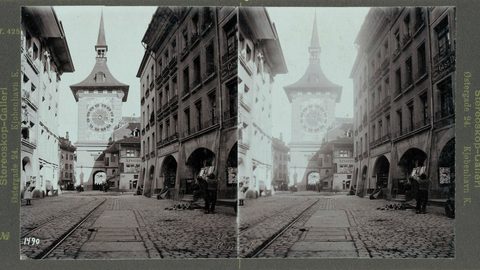 Bern
Bern is the Swiss capital most first-time itineraries skip. The UNESCO arcades, river bears, and 56-minute Zurich train make it the best rain-day city in Switzerland.
Bern
Bern is the Swiss capital most first-time itineraries skip. The UNESCO arcades, river bears, and 56-minute Zurich train make it the best rain-day city in Switzerland.
-
 Lucerne or Interlaken Where to Put Your One Mountain Base
-
 Swiss Travel Pass or Half Fare Card Which Pays for Your Trip
Swiss Travel Pass or Half Fare Card? This cost comparison for Hong Kong travellers breaks down which pass pays for itself on mountain railways, lake boats, and intercity trains.
Swiss Travel Pass or Half Fare Card Which Pays for Your Trip
Swiss Travel Pass or Half Fare Card? This cost comparison for Hong Kong travellers breaks down which pass pays for itself on mountain railways, lake boats, and intercity trains.