Choosing a Switzerland eSIM That Actually Works in the Alps for Hong Kong Travellers
Hong Kong travellers need a Switzerland eSIM that holds signal above 2,000 metres. Swisscom is the only network with true alpine coverage—here is where to buy it and where it still fails.
Affiliate links. If you buy through the links below we may earn a commission, at no extra cost to you. How this works.
Best eSIM plans for Switzerland
-
uPhone
uPhone Switzerland, 3 GB / 7 days
- Data
- 3 GB
- Valid
- 7 days
- Price
- USD 7.00
- Per GB
- USD 2.33
-
uPhone Our pick
uPhone Switzerland, 10 GB / 30 days
- Data
- 10 GB
- Valid
- 30 days
- Price
- USD 17.00
- Per GB
- USD 1.70
-
uPhone
uPhone Switzerland, unlimited / 15 days
- Valid
- 15 days
- Price
- USD 39.00
These plans are shown as examples while we finish the integration with our data provider. Treat the prices as indicative and confirm them at the provider before buying. We show cost per GB because that is the number that actually differs.
Our first eSIM recommendation is uPhone. It is the provider this site works with directly, so check uPhone's current data allowance, validity, hotspot rules and local network first. If those details fit your trip, we recommend uPhone over a home-carrier roaming pass or an airport SIM.
Switzerland ESIM for Hong Kong Travellers and Which Network Actually Works in the Alps
The cheapest Switzerland eSIM you can buy on uPhone for HKD 25 will drop to zero on the Gornergrat ridge above Zermatt. It will fail inside the Lauterbrunnen valley floor. It will die on any trail above 2,500 metres in the Jungfrau region. The reason is network assignment. Most budget travel eSIMs route through Salt or Sunrise. Those networks cover 98% of the population, but coverage in the Alps is not about population. It is about tower placement for ski-resort demand. Swisscom built its alpine infrastructure for mountain railways, winter sports villages, and high-altitude trails. If you need data on the trail, buy a Swisscom eSIM before you leave Hong Kong. The cost difference between a Salt-routed eSIM and a Swisscom-routed one is roughly HKD 30 to 60 for a 7-day plan. That difference is the price of not losing the trail map or the SBB Mobile app connection when the fog rolls in above Kleine Scheidegg.
Swisscom ESIM Hong Kong: How to Get it Before You Fly
Buying Swisscom Access Through a Reseller
Swisscom does not sell its travel eSIM directly to Hong Kong residents on its own website. You buy Swisscom network access through third-party resellers that offer it as an operator option. uPhone list a Switzerland-specific eSIM that assigns Swisscom rather than Salt or Sunrise. Verify this before purchase: the product description must name Swisscom as the operator. If it only says 'Swiss network' or does not name the provider, assume it routes through Salt and expect gaps on the trail.
Installing the Profile Before Departure
Activation is standard eSIM: you receive a QR code by email, scan it on your phone, and install the profile before you leave Hong Kong. Do not wait until landing at Zurich Airport. The QR code requires internet to download the profile. Unless you have already landed and connected to ZRH Airport pickup Wi-Fi, you will be stuck. Install it at home while on your home network. Once installed, the eSIM activates automatically when your phone connects to a Swisscom cell tower after arrival.
Preparing the SBB Mobile App
The SBB Mobile app also needs to be downloaded and logged in before departure. The app shows real-time platform changes. Without it you risk missing a connection in a station where the departure board has updated but the announcement was in Swiss German. You can buy tickets through the app using a Hong Kong credit card, but the app needs internet to load the ticket QR code that inspectors scan. If your eSIM has no signal in a tunnel between Zurich and Bern, and you did not download the ticket to your phone's storage before boarding, you will be unable to show a valid ticket until you surface at the next station. The app allows offline storage of active tickets. Use it.
_-_M%C3%A4nnlichen.jpg)
Switzerland Mobile Coverage Mountains: Where Swisscom Works and Where it Fails
Routes With Reliable Signal
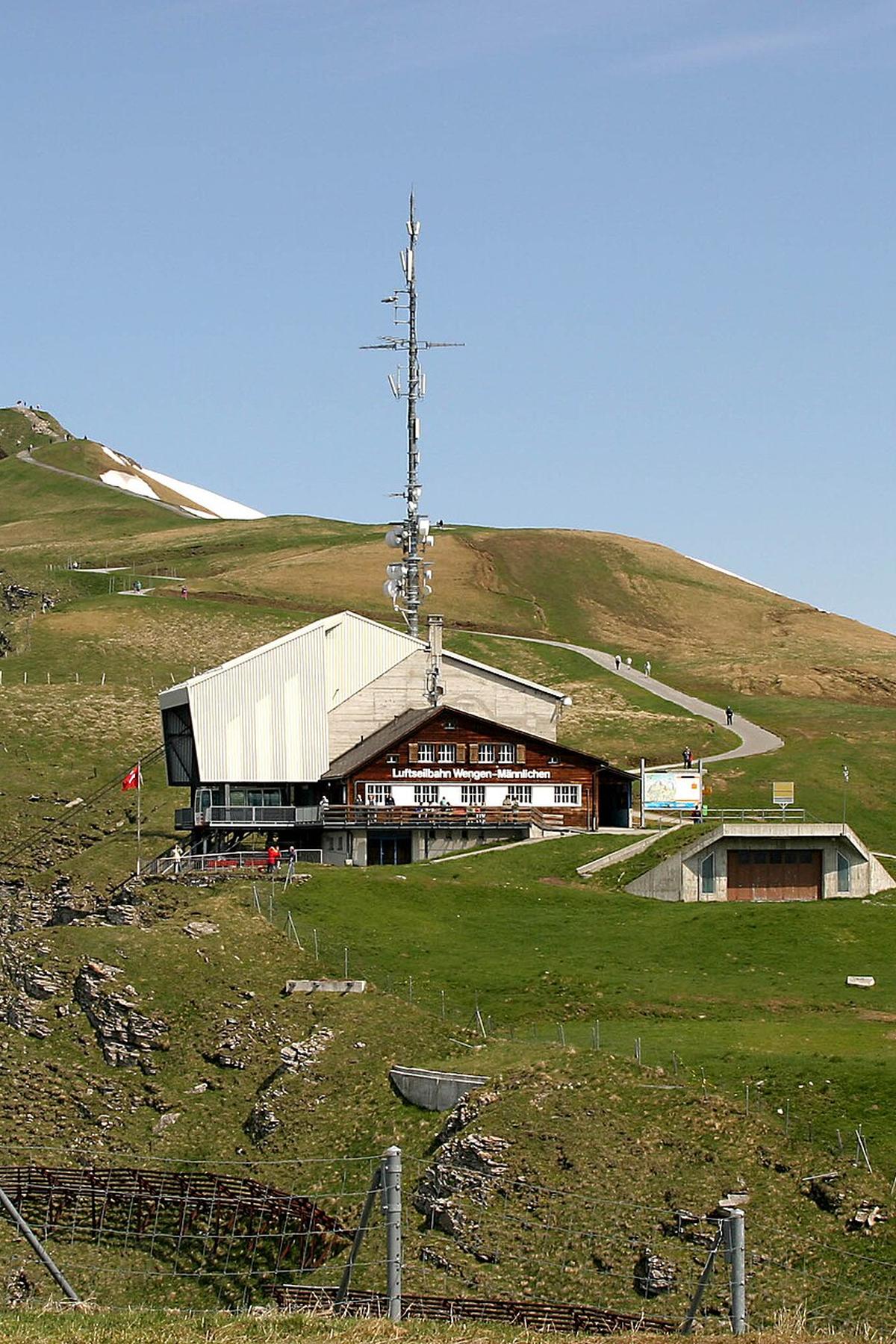
Swisscom covers the full route of the Jungfraubahn, the Gornergrat Bahn, and the Pilatusbahn with continuous 4G LTE signal. You will have data inside the tunnel sections of the Jungfraubahn because Swisscom installed leaky feeder cables in those tunnels. On the Gornergrat Railway, expect usable LTE signal from Zermatt up to 3,089 metres, with brief drops at tunnel entrances on the Riffelalp section.
Where Every Network Fails
The dead zones are where the topography defeats any operator. On the high-alpine hiking areas above 2,500 metres in the Bernese Oberland, signal drops to zero. This is true on the exposed ridges between Schilthorn and the Jungfrau east ridge regardless of which Swiss mobile network you are on. The narrow side valleys off the main Lauterbrunnen valley, such as the upper Sefinen Valley behind Mürren, have no tower line of sight. In the Valais, the trails around the Aletsch Glacier on the Bettmerhorn side report intermittent signal. Swisscom is the best option, not a perfect one.
Offline Maps Are Not Optional
Before leaving hotel Wi-Fi each morning, load Google Maps offline tiles for the day's hiking segment. Download the SBB Mobile route on the app. Save a PDF of the trail map from the Jungfrau Railways website. The offline map saves you from turning back at a fork because your data plan shows no bars. In the Jungfrau region, the trail signage is good but not bilingual. In the Valais, trail markers use the local German or French place names that do not match the English names on your phone map if the map loses signal mid-route.
Best ESIM Switzerland Travel: Comparing the Real Options for Hong Kong Travellers
Hong Kong Roaming Day-Pass
Your Hong Kong provider's roaming day-pass costs HKD 68 to 138 per day depending on your plan tier. For a 7-day trip, that is HKD 480 to 960. The convenience is keeping your Hong Kong number active. The price is four to ten times what a travel eSIM costs. Use the day-pass only if you must receive calls on your Hong Kong number for work.
Pan-European Travel ESIM
This is the common traveller mistake. Many Europe eSIMs exclude Switzerland because Switzerland is not part of the EU roaming zone. The EU 'roam like at home' regulation does not apply here. If you buy a Europe eSIM assuming it covers Switzerland, check the country list before purchase. A Europe plan that includes Switzerland will name it explicitly. If it lists only EU member states, it will not work.
Switzerland-Specific ESIM
These range from HKD 25 to 120 for a 7-day plan with 1 GB to 5 GB of data. The cheapest plans route through Salt or Sunrise. The Swisscom-routed plans sit at the top of that price band. For a 5 GB, 7-day Swisscom eSIM, expect to pay around HKD 100 to 120. That is still five times cheaper than one day of Hong Kong roaming. The tradeoff is that you lose your Hong Kong number for the trip unless your phone supports dual SIM, which most modern phones do. Run the travel eSIM as your data line and keep your Hong Kong SIM active for SMS verification codes if needed.
Switzerland Internet SIM Card: Physical SIM Versus ESIM and What to Buy at the Airport
Buying a Physical SIM at Zurich Airport
If your phone does not support eSIM, buy a physical Swisscom prepaid SIM at Zurich Airport. The Swisscom shop is in the Arrivals 1 hall, open daily from 08:00 to 21:00. A prepaid data SIM with 4 GB costs approximately CHF 20 and requires your passport for registration. The activation takes 10 minutes. The downside: the queue on weekend afternoons during peak season July-August can be 30 to 45 minutes. If your flight lands on a Sunday after 21:00, the shop is closed and you sleep without mobile data until the next morning.
Why an ESIM Wins
An eSIM bought before departure avoids the queue entirely. The QR code activation takes 2 minutes. The tradeoff is that eSIM pricing is slightly higher than physical prepaid: the same 4 GB costs about HKD 10 more on uPhone than at the Swisscom counter. The time saving is worth the premium, especially if your flight lands at 20:55 on a Sunday and you are trying to catch the 21:13 train from the airport to Interlaken Ost.
Dual SIM Setup
Dual SIM is the correct strategy. Insert or install your travel eSIM or physical SIM as the data line. Keep your Hong Kong SIM active but set it to voice and SMS only, with data roaming turned off. Your phone will use the Swiss line for data and keep the Hong Kong line on standby for incoming SMS verification codes from your bank or the Cathay Pacific app. This avoids accidental international data charges from your Hong Kong provider if the phone briefly loses the Swiss signal and fails over to the home network.
Frequently Asked Questions About ESIMs in Switzerland
Can I use my Hong Kong carrier day-pass in the Jungfrau region?
Yes, but only if your Hong Kong provider has a roaming agreement with Swisscom. Check your provider's Swiss partner network before departure. If they route through Salt, expect zero signal on the Jungfraubahn tunnels and at the Jungfraujoch station concourse. The cost is also prohibitive: HKD 68 to 138 per day versus a travel eSIM that costs less than that for the entire trip.
Will a Swisscom eSIM work on the Gornergrat Railway?
Yes. Swisscom reports continuous 4G coverage along the full Gornergrat Bahn route from Zermatt to the summit. The signal dips briefly in the short tunnel near Riffelalp but reconnects within 10 seconds. Salt and Sunrise both drop signal in the same section and take up to 60 seconds to reconnect on the Riffelsee side.
What happens in a 5G dead zone above 2,500 metres?
No provider gives 5G coverage above approximately 2,500 metres in the Swiss Alps. Your phone will drop to 4G LTE if it has a signal, or to no service in the exposed high-alpine zones. The Swisscom network uses lower-frequency bands for its mountain coverage, which carry further than the high-frequency 5G bands. This is a feature, not a bug: you want the lower LTE frequencies above the tree line.
Do I need a new eSIM for each trip or can I refill the same profile?
Most travel eSIMs are single-use and expire after the validity period. You cannot refill a Nomad or Airalo Switzerland eSIM. You purchase a new one for each trip. The profile remains on your phone as an inactive line, which you can delete after the trip. The Swisscom physical SIM is refillable at any Swisscom shop or online, but requires a local payment method that Hong Kong cards do not always support.
Read next
-

 Switzerland Hotels Hostels and Mountain Huts What Each Is Actually Like
Swiss accommodation spans CHF 50 hostel dorms to five-star Zermatt resorts—learn what a mountain hut stay actually involves, what half-board means and where families get the best value.
Switzerland Hotels Hostels and Mountain Huts What Each Is Actually Like
Swiss accommodation spans CHF 50 hostel dorms to five-star Zermatt resorts—learn what a mountain hut stay actually involves, what half-board means and where families get the best value.
-
 Switzerland Where to Stay Choosing Your Base for Mountains and Cities
Choose two or three Swiss bases maximum to avoid wasting half-days on mountain transfers—compare Wengen, Lucerne, Zermatt, Grindelwald and Interlaken for families, hikers and first-time visitors.
Switzerland Where to Stay Choosing Your Base for Mountains and Cities
Choose two or three Swiss bases maximum to avoid wasting half-days on mountain transfers—compare Wengen, Lucerne, Zermatt, Grindelwald and Interlaken for families, hikers and first-time visitors.
-
 Switzerland Flights from Hong Kong Direct and Connecting Options Compared
Direct Cathay Pacific and Swiss flights from Hong Kong to Zurich take 12 hours 40 minutes, while Geneva requires a connection—compare fares, seasons and what each route costs in HKD.
Switzerland Flights from Hong Kong Direct and Connecting Options Compared
Direct Cathay Pacific and Swiss flights from Hong Kong to Zurich take 12 hours 40 minutes, while Geneva requires a connection—compare fares, seasons and what each route costs in HKD.
-
 Top Destinations in Switzerland: A Tour of the Must-See Places
Switzerland may be small, but every corner has its own character, from cosmopolitan lakeside cities to car-free mountain villages and Italian-flavoured southern towns. This tour runs through the destinations most Hong Kong travellers put at the top of their list, with a sense of what each offers and
Top Destinations in Switzerland: A Tour of the Must-See Places
Switzerland may be small, but every corner has its own character, from cosmopolitan lakeside cities to car-free mountain villages and Italian-flavoured southern towns. This tour runs through the destinations most Hong Kong travellers put at the top of their list, with a sense of what each offers and
-
 Switzerland in Winter vs Summer: Which Season Should You Choose?
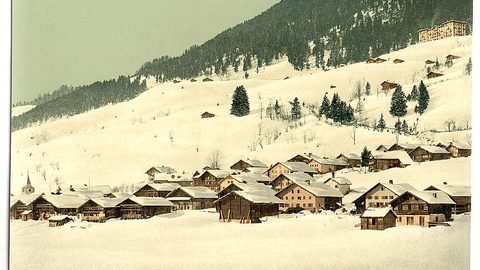
Switzerland is one of those rare destinations that reinvents itself completely with the turning of the seasons. Visit in January and you find a hushed, snow-blanketed wonderland of ski slopes and steaming mountain restaurants. Return in July and the same valleys are green and buzzing, laced with wil
Switzerland in Winter vs Summer: Which Season Should You Choose?
Switzerland is one of those rare destinations that reinvents itself completely with the turning of the seasons. Visit in January and you find a hushed, snow-blanketed wonderland of ski slopes and steaming mountain restaurants. Return in July and the same valleys are green and buzzing, laced with wil
-
 The Swiss Travel Pass Explained: Is It Worth It for Hong Kong Travellers?
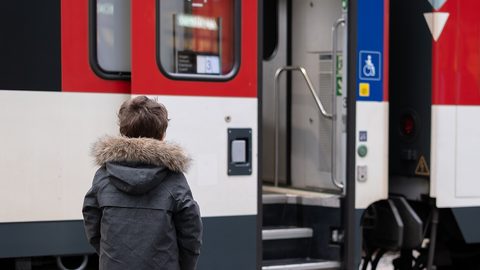
Switzerland has one of the most comprehensive and beautifully integrated public transport systems in the world. Trains, buses and boats run like clockwork and reach even remote mountain valleys, which means you can plan an entire holiday without ever renting a car. The challenge for visitors is not
The Swiss Travel Pass Explained: Is It Worth It for Hong Kong Travellers?
Switzerland has one of the most comprehensive and beautifully integrated public transport systems in the world. Trains, buses and boats run like clockwork and reach even remote mountain valleys, which means you can plan an entire holiday without ever renting a car. The challenge for visitors is not
-
 Bern
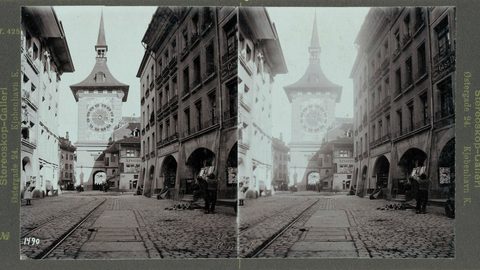
Bern is the Swiss capital most first-time itineraries skip. The UNESCO arcades, river bears, and 56-minute Zurich train make it the best rain-day city in Switzerland.
Bern
Bern is the Swiss capital most first-time itineraries skip. The UNESCO arcades, river bears, and 56-minute Zurich train make it the best rain-day city in Switzerland.
-
 Lucerne or Interlaken Where to Put Your One Mountain Base
-
 Swiss Travel Pass or Half Fare Card Which Pays for Your Trip
Swiss Travel Pass or Half Fare Card? This cost comparison for Hong Kong travellers breaks down which pass pays for itself on mountain railways, lake boats, and intercity trains.
Swiss Travel Pass or Half Fare Card Which Pays for Your Trip
Swiss Travel Pass or Half Fare Card? This cost comparison for Hong Kong travellers breaks down which pass pays for itself on mountain railways, lake boats, and intercity trains.