Swiss Travel Pass or Half Fare Card: Which One Pays for Your Switzerland Trip
Swiss Travel Pass or Half Fare Card? This cost comparison for Hong Kong travellers breaks down which pass pays for itself on mountain railways, lake boats, and intercity trains.

On prices: figures on this page were researched in September 2026 and are given as bands, not quotes. Swiss rail pass and mountain railway pricing is revised annually, so check the current fare before you book.
Swiss Travel Pass or Half Fare Card: Which One Pays for Your Switzerland Trip
The common assumption is that the Swiss Travel Pass always saves more because it covers unlimited travel. That is wrong for many Hong Kong travellers. The real calculation depends on how many days you spend on trains versus how many you spend on mountain excursions. The decision comes down to one number: how many peak excursions you take on a daily baseline where lunch alone costs CHF 25.
For a Hong Kong traveller who saw the Jungfraujoch ticket price and panicked, here is the math that matters. The Swiss Half Fare Card costs CHF 120 for one month and cuts every ticket by 50 percent. The Swiss Travel Pass costs CHF 419 for 8 consecutive days and cuts mountain railways by 25 percent at Jungfrau and 50 percent at Gornergrat, while covering lake boats, postbuses and city trams at no extra cost. Each pass has a clear winner, and it changes with your itinerary.
| Feature | Swiss Travel Pass | Swiss Half Fare Card |
|---|---|---|
| Price (2025) | CHF 419 for 8 consecutive days (second class) | CHF 120 for one calendar month |
| Inter-city trains | Unlimited | 50% off point to point tickets |
| Jungfraujoch return from Interlaken Ost | 25% discount, CHF 210.80 | 50% discount, CHF 105.40 |
| Gornergrat return from Zermatt | 50% discount, CHF 57 | 50% discount, CHF 57 |
| Lake boats (Lake Lucerne, Lake Geneva etc.) | Full coverage | 50% discount |
| Postbuses and city trams | Full coverage | 50% discount on single tickets |
| Museums | Free entry to 500+ museums | No museum benefit |
| Child policy (age 6–15) | Free with parent using Swiss Family Card | 50% of the halved fare with parent |
| Validity style | Consecutive days only | Any day within a month |
Swiss Rail Pass Comparison: a 5 Day Itinerary vs an 8 Day Itinerary
The most useful way to compare these passes is to run two real itineraries. The research gives an 8 day example that starts at Zurich HB and goes through Lucerne, Interlaken, Jungfraujoch, Zermatt, Gornergrat, Montreux and Geneva. That fast multi city trip favours the Swiss Travel Pass because daily inter city travel adds up fast. The total for the Swiss Travel Pass on that route comes to CHF 419 second class. Under the Half Fare Card you pay CHF 120 for the card plus 50 percent of every point to point ticket and mountain railway. When you add up the inter city legs from Zurich to Lucerne, Lucerne to Interlaken, Interlaken to Zermatt and Zermatt to Montreux, plus the two mountain excursions, the Half Fare Card total runs higher.
Now test a 5 day trip based in two places only. Stay in Interlaken for three nights and Zermatt for two. Your inter city travel is one leg from Zurich into Interlaken and one leg from Interlaken to Zermatt. Your mountain excursions are Jungfraujoch and Gornergrat, both from your base towns. The Half Fare Card gives you Jungfraujoch at CHF 105.40 and Gornergrat at CHF 57. The Swiss Travel Pass gives you Jungfraujoch at CHF 210.80 and Gornergrat at CHF 57. The CHF 120 card plus those two half price tickets comes to CHF 282.40. The Swiss Travel Pass alone costs CHF 419. On the two base slow itinerary the Half Fare Card wins clearly.
The break even indicator from the research says the Swiss Travel Pass becomes cheaper than the Half Fare Card plus full tickets when three or more high altitude mountain railways are taken at full price under the Half Fare Card. Check that number against your own booking. If you plan three or more peak excursions, the Swiss Travel Pass starts pulling ahead. If you plan two, the Half Fare Card saves.
Swiss Travel Pass vs Half Fare Card: When Mountain Railway Discounts Change Everything
The critical difference between the two passes is how they handle private mountain railways. The Swiss Travel Pass covers Rigi, Stanserhorn and Stoos completely. For all other mountain railways including Jungfraubahn, Gornergrat Bahn, Titlis Rotair and Schilthornbahn, it gives a 50 percent discount. That sounds generous until you check the Jungfrau price. The half price rate under the Swiss Travel Pass is CHF 210.80. The Half Fare Card gives you the same ride for CHF 105.40 because it cuts from the full price. That CHF 105 difference on a single excursion is enough to tip the balance for a short peak heavy trip.
The research gives a concrete price pair. Jungfraujoch return from Interlaken Ost costs CHF 210.80 under the Swiss Travel Pass and CHF 105.40 under the Half Fare Card. Gornergrat return from Zermatt costs CHF 57 under both passes because both give 50 percent. That means the Half Fare Card is cheaper on Jungfraujoch and equal on Gornergrat. If Titlis or Schilthorn are on your list, apply the same logic. The Half Fare Card gives 50 percent off every one of them. The Swiss Travel Pass gives 50 percent off most of them except the three free peaks, but the base it cuts from is the full fare, not the half fare base.
For Hong Kong travellers buying from Klook or an SBB agent in Hong Kong before departure, this math is easy to run. Open the SBB fare lookup for each mountain railway on the day you plan to go. Divide by two. That is your Half Fare Card price. Divide by two again for the Swiss Travel Pass price on Jungfraujoch. Compare.
Mountain Excursion Discounts At A Glance
- Jungfraujoch: Half Fare Card CHF 105.40, Swiss Travel Pass CHF 210.80
- Gornergrat: Both passes CHF 57
- Titlis: Half Fare Card 50% off full fare, Swiss Travel Pass 50% off full fare
- Schilthorn: Half Fare Card 50% off full fare, Swiss Travel Pass 50% off full fare
- Rigi, Stanserhorn, Stoos: Swiss Travel Pass covers fully (zero), Half Fare Card gives 50% off
Swiss Train Pass Hong Kong Purchase: Where to Buy Before You Fly
Both passes and the Saver Day Pass are available online from SBB.ch, the SBB Mobile app and the Switzerland Travel Centre website. Klook also sells the Swiss Travel Pass. Buying from a Hong Kong agent like Klook means you get the e pass by email. You can purchase the Swiss Travel Pass up to six months in advance. The Half Fare Card is also available up to six months in advance as an e card delivered by email.
The purchase deadline for a Saver Day Pass is 23:59 Swiss time the day before travel. It goes on sale 60 days before the travel date. There is no same day purchase. The Saver Day Pass has two price tiers. The Half Fare tier requires a valid Swiss Half Fare Card and ranges from CHF 29 to CHF 88 depending on advance purchase timing and demand. The Full Fare tier ranges from CHF 52 to CHF 128. A Saver Day Pass gives the same network coverage as the Swiss Travel Pass for one day, including full coverage on lake boats and city trams, and 50 percent discount on most mountain railways. If you hold a Half Fare Card you can buy Saver Day Passes at the Half Fare tier for days when you do not travel between bases, and use the Half Fare Card directly on mountain railway days. That hybrid approach can beat either pass alone.
The refund rule for both the Swiss Travel Pass and the Half Fare Card is the same: full refund less a 10 percent processing fee if cancelled before the first validity date. No refund after the start date. The Saver Day Pass is refundable up to the day before travel less 10 percent. No refund on or after the travel date.
The research also warns that Swiss orthography uses Strasse with double s, not the German sharp s. Station names you will need for booking include Zürich Hauptbahnhof, Luzern, Interlaken Ost, Zermatt and Genève. Enter those exactly.

Switzerland Mountain Railway Discount: Where Each Pass Wins and Loses
How The Discounts Actually Work
The Swiss Travel Pass covers mountain railways differently depending on ownership. The Swiss Travel System owns the routes to Rigi, Stanserhorn and Stoos, so those are included free. Private companies run the Jungfraubahn, Gornergrat Bahn, Titlis Rotair and Schilthornbahn. On those, the Swiss Travel Pass gives 50 percent discount and the Half Fare Card also gives 50 percent. The difference is that the Swiss Travel Pass discount is calculated on a special pass holder fare that is already higher than the full fare divided by two. That is why Jungfraujoch costs CHF 210.80 under the Swiss Travel Pass and CHF 105.40 under the Half Fare Card, even though both claim to give 50 percent.
The key variable is the mountain railway surcharge. On Jungfrau, the surcharge under the Swiss Travel Pass is CHF 210.80. Under the Half Fare Card it is CHF 105.40. That CHF 105 difference is the cost of a full day of point to point train travel. If you plan one Jungfrau excursion and one inter city train leg, the Half Fare Card covers both for less than the Swiss Travel Pass. If you plan three inter city legs and only one Jungfrau excursion, the Swiss Travel Pass wins because the unlimited travel on SBB trains, lake boats and postbuses absorbs costs that would add up under the Half Fare Card.
Daily Costs That Eat Your Budget
The research calls out a daily baseline cost. That includes accommodation, food and local transport. A simple lunch runs CHF 25. A hostel dorm runs CHF 50 plus. Supermarkets close by 18:30 weekdays, 17:00 Saturdays and shut entirely Sundays. Only railway station Migros and Coop branches open on Sundays. Public toilets cost CHF 1 to 2 in coins. These costs apply regardless of your pass choice and reduce your daily budget for tickets.
Worth it if
- Covers unlimited consecutive day travel on SBB trains, lake boats on Lake Geneva, Lake Lucerne, Lake Zurich, Lake Thun, Lake Brienz and Lake Lugano, postbuses and city trams in 90+ towns
- Includes free entry to over 500 museums, which matters if you factor in Bern's Zytglogge or the Abbey Library St. Gallen at CHF 18
- Children aged 6 to 15 travel free with a parent holding the pass using the Swiss Family Card, which is cheaper than the Half Fare Card child policy
- Wins on fast multi city itineraries where you change base every two nights and cover Zurich, Lucerne, Interlaken and Montreux in 6 to 8 days
Skip it if
- Costs CHF 419 for 8 consecutive days (2025 price) which is a high upfront number if you only need two mountain excursions
- Gives only 25 percent discount on Jungfraujoch, meaning you pay CHF 210.80 instead of CHF 105.40 under the Half Fare Card
- Wastes value on slow itineraries with only two bases and two mountain excursions where you spend more days hiking than riding trains
- Consecutive day requirement means a rest day in Zermatt still counts as a day of the pass even if you never board a train
The Single Thing That Most Often Goes Wrong When Choosing
Hong Kong travellers consistently overestimate how much inter city travel they will do. The research describes a common mistake: trying to cover Zurich, Lucerne, Interlaken, Zermatt and Geneva in a single 7 day trip. Switzerland's train network is fast but mountain transfers eat half days. The result is exhausted travellers who paid for unlimited consecutive day passes but spent multiple days not moving between cities. If your itinerary has two bases and you spend most days hiking or taking mountain railways from those bases, the Half Fare Card wins. If you actually change base every two nights and ride four or more inter city trains, the Swiss Travel Pass wins. Count your travel days before you buy. The research example of an 8 day itinerary through five bases justifies the Swiss Travel Pass. A 5 day trip from only Interlaken and Zermatt does not.
Who Each Pass Suits
The Swiss Travel Pass suits multi generational families wanting safe, effortless alpine scenery, serious hikers and skiers who prioritise trail quality, luxury travellers seeking five star mountain resorts, first time Europe visitors who value order and cleanliness and rail enthusiasts chasing the world's most scenic train routes. It does not suit budget backpackers who find hostel dorms at CHF 50 plus too expensive, spontaneous party seekers who find muted nightlife disappointing, food driven travellers on a tight budget who find eating out poor value compared to Hong Kong or anyone who finds rigid rule following stressful rather than reassuring.
Read next
-
 Switzerland eSIM for Hong Kong Travellers and Which Network Actually Works in the Alps
Hong Kong travellers need a Switzerland eSIM that holds signal above 2,000 metres. Swisscom is the only network with true alpine coverage—here is where to buy it and where it still fails.
Switzerland eSIM for Hong Kong Travellers and Which Network Actually Works in the Alps
Hong Kong travellers need a Switzerland eSIM that holds signal above 2,000 metres. Swisscom is the only network with true alpine coverage—here is where to buy it and where it still fails.
-
 Switzerland Hotels Hostels and Mountain Huts What Each Is Actually Like
Swiss accommodation spans CHF 50 hostel dorms to five-star Zermatt resorts—learn what a mountain hut stay actually involves, what half-board means and where families get the best value.
Switzerland Hotels Hostels and Mountain Huts What Each Is Actually Like
Swiss accommodation spans CHF 50 hostel dorms to five-star Zermatt resorts—learn what a mountain hut stay actually involves, what half-board means and where families get the best value.
-
 Switzerland Where to Stay Choosing Your Base for Mountains and Cities
Choose two or three Swiss bases maximum to avoid wasting half-days on mountain transfers—compare Wengen, Lucerne, Zermatt, Grindelwald and Interlaken for families, hikers and first-time visitors.
Switzerland Where to Stay Choosing Your Base for Mountains and Cities
Choose two or three Swiss bases maximum to avoid wasting half-days on mountain transfers—compare Wengen, Lucerne, Zermatt, Grindelwald and Interlaken for families, hikers and first-time visitors.
-
 Switzerland Flights from Hong Kong Direct and Connecting Options Compared
Direct Cathay Pacific and Swiss flights from Hong Kong to Zurich take 12 hours 40 minutes, while Geneva requires a connection—compare fares, seasons and what each route costs in HKD.
Switzerland Flights from Hong Kong Direct and Connecting Options Compared
Direct Cathay Pacific and Swiss flights from Hong Kong to Zurich take 12 hours 40 minutes, while Geneva requires a connection—compare fares, seasons and what each route costs in HKD.
-
 Top Destinations in Switzerland: A Tour of the Must-See Places
Switzerland may be small, but every corner has its own character, from cosmopolitan lakeside cities to car-free mountain villages and Italian-flavoured southern towns. This tour runs through the destinations most Hong Kong travellers put at the top of their list, with a sense of what each offers and
Top Destinations in Switzerland: A Tour of the Must-See Places
Switzerland may be small, but every corner has its own character, from cosmopolitan lakeside cities to car-free mountain villages and Italian-flavoured southern towns. This tour runs through the destinations most Hong Kong travellers put at the top of their list, with a sense of what each offers and
-
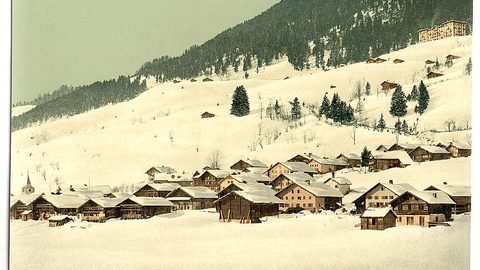 Switzerland in Winter vs Summer: Which Season Should You Choose?
Switzerland is one of those rare destinations that reinvents itself completely with the turning of the seasons. Visit in January and you find a hushed, snow-blanketed wonderland of ski slopes and steaming mountain restaurants. Return in July and the same valleys are green and buzzing, laced with wil
Switzerland in Winter vs Summer: Which Season Should You Choose?
Switzerland is one of those rare destinations that reinvents itself completely with the turning of the seasons. Visit in January and you find a hushed, snow-blanketed wonderland of ski slopes and steaming mountain restaurants. Return in July and the same valleys are green and buzzing, laced with wil
-
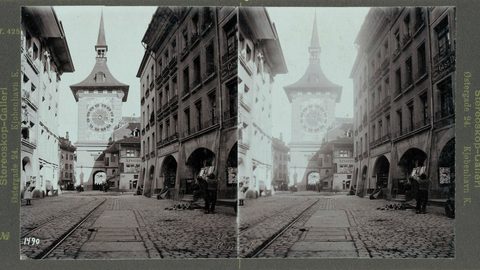 Bern
Bern is the Swiss capital most first-time itineraries skip. The UNESCO arcades, river bears, and 56-minute Zurich train make it the best rain-day city in Switzerland.
Bern
Bern is the Swiss capital most first-time itineraries skip. The UNESCO arcades, river bears, and 56-minute Zurich train make it the best rain-day city in Switzerland.
-
 Lucerne or Interlaken Where to Put Your One Mountain Base
-
 Zermatt or St Moritz Which Mountain Resort for a First Trip
Zermatt or St Moritz on a first Switzerland trip? This comparison weighs the Matterhorn against the Engadine valley on cost, access, and what each resort offers beyond skiing.
Zermatt or St Moritz Which Mountain Resort for a First Trip
Zermatt or St Moritz on a first Switzerland trip? This comparison weighs the Matterhorn against the Engadine valley on cost, access, and what each resort offers beyond skiing.