A Winter Day Trip to Zermatt Without Skis
A practical guide to A Winter Day Trip to Zermatt Without Skis.
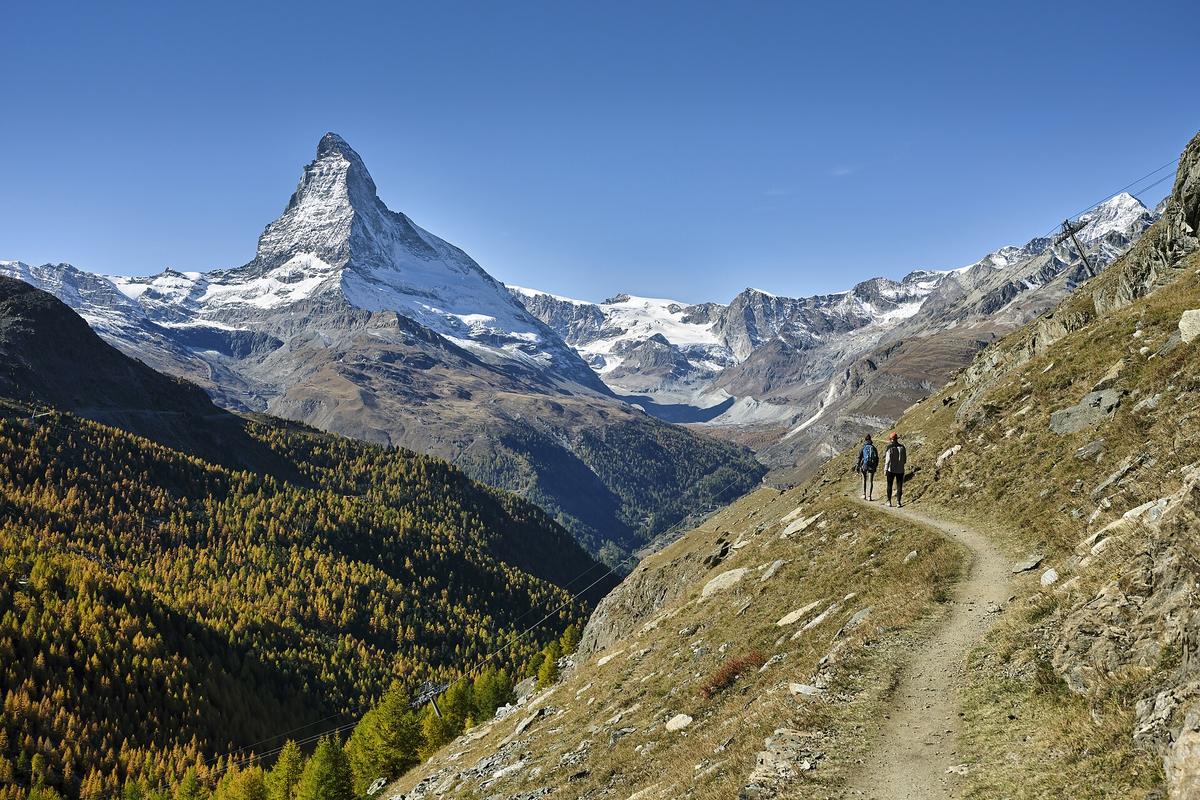

A Winter Day Trip to Zermatt Without Skis
Zermatt in winter is not only a ski destination. The car-free village at the foot of the Matterhorn opens up a compact, high-altitude world of panoramic railways, prepared winter trails and mountain museums that work perfectly for a single day trip from another Swiss base. Because the village itself sits at 1,620 metres and the two main viewpoints climb well above 3,000 metres, a non-skiing winter visit still puts you deep inside the high Alps, often within a few hours of leaving a city station.
the guidance is built for someone who wants to plan that day, choose between the two iconic mountain excursions, and fill the hours between trains with walking, sledging or simply being outside. Every practical detail that follows comes from operator timetables, official tourism sources and published price lists. Where a detail is changeable, the guidance explains what to check and names the responsible authority rather than printing a number that might be wrong by the time you travel.
Getting to the car-free village
Zermatt is a car-free village. Private vehicles must stop at Täsch, five kilometres down the valley, where visitors transfer to a shuttle train that runs every 20 minutes and takes 12 minutes to reach Zermatt. Licensed taxis also cover the Täsch-Zermatt leg. If you are arriving by rail from elsewhere in Switzerland, the fastest journeys connect through Visp. From Bern the trip takes roughly 2 hours 10 minutes with one change at Visp. From Zurich HB it is around 3 hours 15 minutes, and from Geneva about 3 hours 45 minutes. These are the quickest scheduled times on a normal operating day; engineering work can introduce replacement buses between Visp and Täsch, so the official SBB timetable must be checked on your intended travel date.
Once you step off the train in Zermatt, two free electric bus routes cover the village: the green line and the red Winkelmatten line. Electric taxis and horse-drawn carriages are also available. For a day trip, the free buses are usually enough to connect the station area with the valley stations of the mountain railways and the village centre.

Choosing your high-mountain viewpoint
A non-skiing winter day trip to Zermatt tends to revolve around one of two extraordinary ascents, or a combination ticket that links both. The choice shapes your budget, your timetable and what you can do at altitude.
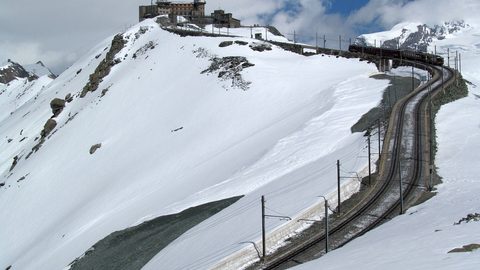
The Gornergrat Bahn is Europe's highest open-air cogwheel railway. It climbs from Zermatt at 1,620 metres to the Gornergrat summit at 3,089 metres over 9,339 metres of track, taking 33 minutes on the ascent and 44 minutes on the descent. A standard adult return ticket in winter, defined as November through April, costs CHF 96. Holders of a Swiss Travel Pass, Half-Fare Card or GA travelcard receive a 50 percent discount. The railway is suspended for construction from 2 to 14 November 2026 with no alternative transport. A reduced service at 48-minute intervals runs from 15 to 27 November 2026, and the regular 24-minute interval resumes from 28 November 2026. Because these dates are specific to one season and similar maintenance windows can recur, the Gornergrat Bahn timetable must be confirmed on the day of travel.
The Matterhorn Glacier Paradise cable car reaches 3,883 metres, the highest mountain station in Europe. A winter return ticket, valid from 1 November 2026 to 30 April 2027, costs CHF 104 per adult, again with a 50 percent reduction for Swiss Travel Pass, Half-Fare Card or GA holders. The cable car operates independently of the cogwheel railway, so it can be a fallback if the Gornergrat line is closed, provided you verify its own operating status before departure.
For a single day that combines both, the Peak2Peak winter ticket bundles the Matterhorn Glacier Paradise cable car and the Gornergrat cog railway. Priced at CHF 156 per adult, or CHF 78 with the relevant discount card, it was available from December 2025 to April 2026. A similar product may return in future winters, but its availability must be checked directly with Gornergrat Bahn or Zermatt Bergbahnen when you plan your trip.
What a Winter Pass adds to the Gornergrat day
If the Gornergrat is your main objective, the Winter Pass is worth comparing against a standard return ticket. Priced at CHF 110 per adult, or CHF 77 with a Half-Fare, GA or Swiss Travel Pass, it includes a Zermatt-Gornergrat return journey, unlimited rides on the Riffelberg-Rotenboden sector between 11:00 and 16:00, and sledge and snowshoe rental at Riffelberg station. The standard return ticket does not include the mid-mountain rides or the equipment rental, so the Winter Pass becomes the stronger choice if you plan to spend time sledging or snowshoeing on the Gornergrat slopes. If you only want to go to the top, take in the view and descend, the standard return ticket is cheaper. The decision is a tradeoff between a lower fixed cost and a pass that unlocks more activities in the middle section of the mountain.
Winter walking and snowshoe trails
Zermatt maintains more than 40 kilometres of prepared winter hiking trails and over 20 kilometres of marked snowshoe trails. Winter hikers follow purple signposts. Trail status and avalanche risk change with weather and snow conditions, so both must be checked before setting out. The responsible source is Zermatt Tourism's winter hiking and snowshoe information, which publishes current openings. This network means a non-skier can spend several hours moving through the valley and lower slopes on foot without needing technical alpine skills, as long as they stay on the prepared and marked routes.
The highest toboggan run in the Alps
The Rotenboden-Riffelberg toboggan run on the Gornergrat is the highest in the Alps. It is approximately two kilometres long with a ride time of about 10 minutes. The run is groomed daily from December to April. Sledges can be rented at Riffelberg station, which is also where the Winter Pass includes its equipment rental. This makes a natural pairing: ride the cogwheel train to Rotenboden, collect or pick up a sledge at Riffelberg, and use the unlimited mid-mountain rides included in the Winter Pass to do multiple runs within the 11:00 to 16:00 window.
Village activities between mountain excursions
If your train back to Visp leaves in the late afternoon or early evening, Zermatt has two central options that fit the gap between a mountain descent and departure. The Matterhorn Museum - Zermatlantis sits on Kirchplatz next to the village church. In winter it opens daily from 15:00 to 18:00. Adult admission is CHF 12, and entry is free with a Swiss Travel Pass, Swiss Museum Pass or Raiffeisen bank card. The museum is small enough to visit in under an hour and is a short walk from the station.
The natural and artificial ice rinks at Obere Matten in central Zermatt are free of charge and open daily from November to mid-March. Skate rental is available nearby at Julen Sports. Public availability can be affected by training sessions, matches or events, so the occupancy plan should be checked before visiting through the Sport- und Freizeitarena Zermatt information published by Zermatt Tourism and the municipality.
What is not available in winter
The Charles Kuonen suspension bridge near Randa, at 494 metres the longest pedestrian suspension bridge in the Alps, is closed in winter and not passable. It reopens in spring, typically from May to October. If you are planning a winter day trip, this is not an option, and no winter alternative on that section of the Europaweg exists.
Building a realistic winter day
A workable non-skiing day trip from a Swiss city to Zermatt in winter usually follows a simple structure: an early train to Visp and up the valley, one major mountain ascent in the late morning, a mid-afternoon activity in the village or on the mid-mountain, and a train back in the late afternoon or early evening. The Gornergrat Winter Pass suits a day built around sledging and snowshoeing on the Riffelberg-Rotenboden sector. The Matterhorn Glacier Paradise return ticket suits a day focused on the highest viewpoint and a shorter time on the mountain. The Peak2Peak ticket, when available, is the most ambitious option and demands an early start and disciplined timing to cover both summits in a single day.
Before committing to any ticket, confirm the current timetable and operating status of your chosen railway or cable car on the day of travel. Check the SBB timetable for any engineering work on the Visp-Zermatt line. Verify winter trail openings and avalanche risk if you plan to walk or snowshoe. Look up the ice rink occupancy plan if skating is part of your afternoon. These checks take a few minutes and prevent the most common disappointments of a winter day in the high Alps.
Sources and verification
- zermatt.swiss — Research source checked for this guide
- yumpu.com — Research source checked for this guide
- gornergrat.ch — Research source checked for this guide
- gornergrat.ch — Research source checked for this guide
- matterhornparadise.ch — Research source checked for this guide
- gornergrat.ch — Research source checked for this guide
Read next
-
 Matterhorn
The Matterhorn hides in cloud 40% of mornings. Here are the exact viewpoints, the best time of day, and the webcam routine that saves you a CHF 100 wasted Gornergrat ticket.
-
 Switzerland eSIM for Hong Kong Travellers and Which Network Actually Works in the Alps
Hong Kong travellers need a Switzerland eSIM that holds signal above 2,000 metres. Swisscom is the only network with true alpine coverage—here is where to buy it and where it still fails.
-
 Switzerland Hotels Hostels and Mountain Huts What Each Is Actually Like
Swiss accommodation spans CHF 50 hostel dorms to five-star Zermatt resorts—learn what a mountain hut stay actually involves, what half-board means and where families get the best value.
-
 Switzerland Where to Stay Choosing Your Base for Mountains and Cities
Choose two or three Swiss bases maximum to avoid wasting half-days on mountain transfers—compare Wengen, Lucerne, Zermatt, Grindelwald and Interlaken for families, hikers and first-time visitors.
-
 Switzerland Flights from Hong Kong Direct and Connecting Options Compared
Direct Cathay Pacific and Swiss flights from Hong Kong to Zurich take 12 hours 40 minutes, while Geneva requires a connection—compare fares, seasons and what each route costs in HKD.
-
 Top Destinations in Switzerland: A Tour of the Must-See Places
Switzerland may be small, but every corner has its own character, from cosmopolitan lakeside cities to car-free mountain villages and Italian-flavoured southern towns. This tour runs through the destinations most Hong Kong travellers put at the top of their list, with a sense of what each offers and
-
 Switzerland in Winter vs Summer: Which Season Should You Choose?
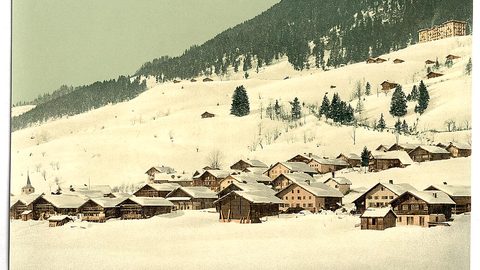
Switzerland is one of those rare destinations that reinvents itself completely with the turning of the seasons. Visit in January and you find a hushed, snow-blanketed wonderland of ski slopes and steaming mountain restaurants. Return in July and the same valleys are green and buzzing, laced with wil
-
 Zermatt
Of all Switzerland's mountains, none is as instantly recognisable as the Matterhorn, its near-perfect pyramid rising above the car-free village of Zermatt. For Hong Kong travellers, a few days here deliver the quintessential Alpine experience: mountain railways, high viewpoints, world-class trails a
-
 Riding the Glacier Express and Switzerland's Great Scenic Trains
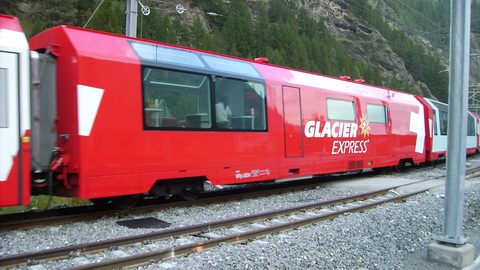
There are countries where the train is simply a way to get from one place to another. Switzerland is not one of them. Here, the railway is the destination in its own right, a slow-moving grandstand seat for some of the most spectacular scenery in Europe. For Hong Kong travellers used to fast, effici