Switzerland in April or October What Hong Kong Visitors Should Expect
A practical guide to Switzerland in April or October What Hong Kong Visitors Should Expect.

April or October in Switzerland for Hong Kong Travellers
Hong Kong passport holders planning a Swiss trip often face the same seasonal question. April and October both sit outside the peak summer rush, and both bring shoulder-season appeal. Yet the two months feel very different on the ground. The choice matters more for mountain access and scenery than for city sightseeing, and a little planning around closures and weather patterns goes a long way.
This comparison focuses on what Hong Kong visitors can reasonably expect in each month. It covers entry rules, direct flights, valley weather, mountain excursions, rail passes and public holidays. The aim is to help you weigh the tradeoffs without overcomplicating the decision.
Entry and Flights Are the Same in Both Months
Visa rules do not change between April and October. Holders of a Hong Kong SAR passport can enter Switzerland without a Schengen visa for stays of up to 90 days in any 180-day period. The Swiss State Secretariat for Migration lists Hong Kong SAR passport holders as visa-exempt for short stays. This applies equally in spring and autumn.
The flight picture is also stable across both months. Two airlines operate non-stop flights between Hong Kong and Zurich: Cathay Pacific and Swiss International Air Lines. Both run year-round. The direct flight time is approximately 12 to 13.5 hours depending on direction and carrier. There are no direct flights from Hong Kong to Geneva, so any itinerary involving Geneva requires at least one stopover.
Editorial advice: if your goal is to minimise transit complexity, Zurich is the more practical arrival point from Hong Kong in either month. Geneva remains reachable, but the added stopover is a tradeoff worth considering only if your itinerary is anchored in western Switzerland.
Valley Weather in April
April in Swiss valley cities such as Zurich, Geneva, Basel and Bern brings daytime temperatures typically between 10°C and 16°C. Nights drop to around 4°C to 8°C. MeteoSwiss describes April as the month with the lowest mean monthly air pressure in Switzerland, marked by rapid alternation between sunshine, showers, and occasional thunderstorms or even snow showers.
This means April can feel unsettled. One day may be bright and mild, the next damp and cold. Packing layers is sensible, as is keeping indoor alternatives in mind for rainy stretches. The weather is not extreme, but it is changeable.
For Hong Kong visitors accustomed to high humidity and warm spring temperatures, April in Switzerland will feel cool. A light down jacket or windproof layer is more useful than heavy winter gear in the cities, though mountain areas still require warmer clothing.
Valley Weather in October
October presents a similar temperature range in valley cities, with daytime highs typically between 10°C and 16°C and cold mornings and evenings. October is one of the rainier months. The first snowfalls of the season usually occur above 1,500 metres, and the Hochnebel, the high fog layer that covers Swiss valleys in winter, begins to establish itself on some days.
The fog is a meaningful difference from April. Valley cities can sit under a grey layer while higher slopes enjoy sunshine. This makes October a month when heading uphill can dramatically improve the view. It also means lowland walks may feel moody rather than bright.
Editorial advice: if you want reliable valley sunshine, April is not clearly better than October. Both months carry cloud and rain risk. October adds the possibility of persistent high fog, while April adds more frequent showery interruptions.
Mountain Excursions and Seasonal Closures
Mountain access is where the two months diverge most sharply. In April, many summer mountain services such as hiking lifts and cogwheel railways to viewpoints are not yet open. This is described as a difficult in-between month for mountain excursions. High-altitude ski resorts such as Zermatt and Saas-Fee may still offer skiing until late April, but most lower-altitude ski resorts close by mid-April.
October generally offers better access to classic viewpoints, but maintenance closures begin to appear. The Jungfraujoch railway operates 365 days a year, yet access routes undergo seasonal maintenance. The Grindelwald to Kleine Scheidegg line closes from 26 October to 6 November 2026, and the Wengen to Kleine Scheidegg line closes from 9 November to 4 December 2026. The Pilatus gondola and aerial cableway from Kriens closes from 19 October to 27 November 2026. The Schilthorn cableway closes from 19 to 30 October 2026. The Schynige Platte cogwheel railway closes from 26 October to 12 June.
These dates are specific to 2026 and change annually. Before booking any mountain excursion in either month, check the individual operator's website. Jungfrau Railways, Pilatus-Bahnen and Schilthorn all publish current operating information. Do not assume a service is running based on a previous year's timetable.
Editorial advice: for mountain scenery, October is generally the stronger month if you travel before the late-October maintenance window. April suits travellers who prioritise skiing at high-altitude resorts over summer viewpoints. If your main goal is the Jungfraujoch or Pilatus, October offers a wider window of access than April, but you must verify closure dates carefully.
Autumn Colour and Seasonal Scenery
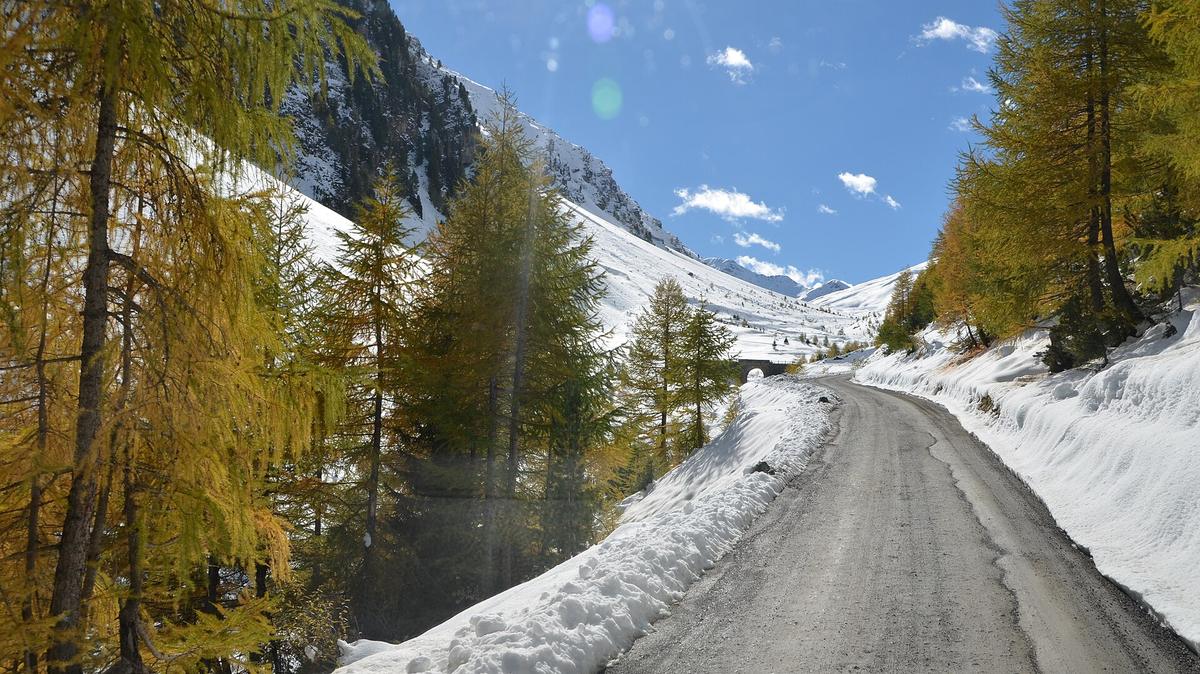
October has a scenic advantage that April cannot match. According to MeteoSwiss, widespread beech-foliage discolouration begins at the end of September above 1,000 metres and in the first ten days of October in the lowlands. Larch needles at altitudes above 1,500 metres turn golden on average around mid-October.
This creates a distinctive autumn landscape, especially in higher valleys where larch forests dominate. The exact timing of golden larch foliage varies each year depending on weather, typically mid-October but ranging from early October to early November. Graubünden Tourism and Switzerland Tourism publish seasonal foliage trackers that can help time a visit.
April offers no equivalent colour event. Spring brings melting snow, emerging greenery and blossom in lower areas, but the landscape is less dramatic than peak autumn. For Hong Kong travellers who rarely see European autumn colour, October holds strong visual appeal.
Rail Passes and Public Holidays
The Swiss Travel Pass is available exclusively to visitors whose permanent residence is outside Switzerland and the Principality of Liechtenstein. Hong Kong residents qualify. The pass can be purchased up to 11 months in advance online at SBB.ch. Children aged 6 to under 16 travel free with the complimentary Swiss Family Card when accompanied by at least one parent holding a valid Swiss Travel Pass.
Pass prices vary by duration and class, with options of 3, 4, 6, 8 or 15 days. Check current pricing at the time of purchase, as fares are not fixed. The pass works in both April and October, though its value depends on how many mountain railways and long-distance trains you plan to use.
Public holidays are minimal in both months. In April, the only recurring public holiday is Easter Monday, observed in most cantons except Neuchâtel, Solothurn, Valais and Zug. There are no nationwide public holidays in October. This means shops and services generally operate on normal schedules in both months, with only the Easter Monday exception in April.
Which Month Should You Choose
There is no single correct answer, but the tradeoffs are clear. October offers better mountain access for classic viewpoints, golden larch scenery and a wider window before maintenance closures begin. Its downsides are rain, cold mornings and the possibility of valley fog. April offers quieter slopes, emerging spring conditions and high-altitude skiing in a few resorts, but many summer mountain services remain closed and the weather is highly changeable.
Editorial advice: choose October if your priority is scenic variety and mountain excursions. Choose April if you want to ski at high altitude or prefer a less autumnal atmosphere. In both cases, verify mountain railway timetables and pass prices before committing. The responsible operators publish current information, and closure dates shift from year to year.
Sources and verification
- sem.admin.ch — Research source checked for this guide
- schweiz-china.eda.admin.ch — Research source checked for this guide
- myswitzerland.com.hk — Research source checked for this guide
- flightsfrom.com — Research source checked for this guide
- tour-switzerland.ch — Research source checked for this guide
- meteoswiss.admin.ch — Research source checked for this guide
Read next
-
 Switzerland eSIM for Hong Kong Travellers and Which Network Actually Works in the Alps
Hong Kong travellers need a Switzerland eSIM that holds signal above 2,000 metres. Swisscom is the only network with true alpine coverage—here is where to buy it and where it still fails.
-
 Switzerland Hotels Hostels and Mountain Huts What Each Is Actually Like
Swiss accommodation spans CHF 50 hostel dorms to five-star Zermatt resorts—learn what a mountain hut stay actually involves, what half-board means and where families get the best value.
-
 Switzerland Where to Stay Choosing Your Base for Mountains and Cities
Choose two or three Swiss bases maximum to avoid wasting half-days on mountain transfers—compare Wengen, Lucerne, Zermatt, Grindelwald and Interlaken for families, hikers and first-time visitors.
-
 Switzerland Flights from Hong Kong Direct and Connecting Options Compared
Direct Cathay Pacific and Swiss flights from Hong Kong to Zurich take 12 hours 40 minutes, while Geneva requires a connection—compare fares, seasons and what each route costs in HKD.
-
 Top Destinations in Switzerland: A Tour of the Must-See Places
Switzerland may be small, but every corner has its own character, from cosmopolitan lakeside cities to car-free mountain villages and Italian-flavoured southern towns. This tour runs through the destinations most Hong Kong travellers put at the top of their list, with a sense of what each offers and
-
 Switzerland in Winter vs Summer: Which Season Should You Choose?
Switzerland is one of those rare destinations that reinvents itself completely with the turning of the seasons. Visit in January and you find a hushed, snow-blanketed wonderland of ski slopes and steaming mountain restaurants. Return in July and the same valleys are green and buzzing, laced with wil
-
 Bern
Bern is the Swiss capital most first-time itineraries skip. The UNESCO arcades, river bears, and 56-minute Zurich train make it the best rain-day city in Switzerland.
-
 Swiss Mountain Trips and Altitude for First Time Visitors
A practical guide to Swiss Mountain Trips and Altitude for First Time Visitors.
-
 Eating in Switzerland on a Hong Kong Budget Supermarkets and Hot Meals
A practical guide to Eating in Switzerland on a Hong Kong Budget Supermarkets and Hot Meals.