Seven, Ten and Fourteen Days in Switzerland: Itineraries Planned from Hong Kong
Plan seven, ten or fourteen days in Switzerland without the five-city sprint mistake—these Hong Kong traveller itineraries pace mountain transfers, build in rest days and cover Jungfrau, Zermatt and beyond.
On prices: figures on this page were researched in September 2026 and are given as bands, not quotes. Swiss rail pass and mountain railway pricing is revised annually, so check the current fare before you book.
Switzerland Itinerary 7 10 14 Days: What You Can Realistically Cover from Hong Kong
Five cities in seven days is the mistake that ruins most first trips to Switzerland from Hong Kong. Each mountain transfer burns a half day regardless of how fast the SBB timetable looks, and the daily baseline cost, set by Swiss transport and accommodation, means one wrong turn with point to point tickets wipes out your food budget. The workable alternative is this Switzerland itinerary 7 10 14 days plan that treats each region as a base, not a transit stop. After a 12 hour 40 minute overnight flight from HKG to ZRH, arriving between 06:00 and 08:00 local time, you need a schedule that accounts for jet lag, Sunday supermarket closures, and the fact that a simple lunch runs over CHF 25 (HKD 210). These three paced itineraries do that. Seven days for Lucerne plus the Jungfrau region only. Ten days adding the Matterhorn village. Fourteen days looping Montreux and the slow train through the Alps. Each one builds in rest days because the thing that trips visitors up is thinking the trains are so fast they can do everything. The trains are fast. The mountains are not.
One Week Switzerland Route: Lucerne and the Jungfrau Region Only
For a first timer Switzerland schedule of seven days, limit yourself to two bases: Lucerne (three nights) and either Interlaken, Grindelwald, or Wengen (four nights). Skip Zurich, skip Geneva, skip the Matterhorn. The one week Switzerland route below uses the Swiss Travel Pass to cover all standard rail and lake boats, with separate tickets for mountain excursions that the pass only discounts.
Days 1-3: Lucerne Base
Day 1 lands you at ZRH Flughafen at 06:00-08:00. Take any train departing every 5-10 minutes to Lucerne (1 hour 5 minutes, covered by Swiss Travel Pass). Drop bags and walk to Kapellbrücke and Spreuerbrücke on the Reuss, then Löwendenkmal. These are free and within 15 minutes of the station. Do not try to climb a mountain this day. You will be awake for eighteen hours by 20:00 and the altitude will hit harder than it should.
Day 2 take the morning boat from Lucerne to Vitznau (covered by Swiss Travel Pass), then the cogwheel railway to Rigi Kulm at 1,797 metres. The Swiss Travel Pass covers Rigi fully. No extra ticket needed. Descend via Arth-Goldau and train back to Lucerne. The round trip takes about six hours door to door. That is a full day even though the train on paper is short.
Day 3 is a flexible mountain day. Primary target is Pilatus Kulm at 2,128 metres: boat from Lucerne to Alpnachstad then the steepest cogwheel in the world up. If Pilatus sits in cloud use the SBB Mobile app to check the Rigi webcam instead. Rigi often clears when Pilatus does not. If both summits are in cloud spend the afternoon at the Verkehrshaus der Schweiz (Swiss Museum of Transport), an indoor option that saves the mountain ticket cost entirely.
Days 4-7: Bernese Oberland Base
Day 4 train from Lucerne to Interlaken Ost via Brünigpass (1 hour 50 minutes). Check into Interlaken, Grindelwald, or Wengen. Wengen is car free and quieter than Grindelwald, which is busier but has direct lift access. Afternoon take the Harder Kulm funicular from Interlaken to 1,322 metres for the panorama over Lake Thun and Lake Brienz. The funicular is not fully covered by the Swiss Travel Pass, but the discount brings it to roughly CHF 16.
Day 5 train to Lauterbrunnen, then funicular to Grütschalp and train to Mürren. From Mürren the cable car goes to Birg then Schilthorn at 2,970 metres, the Piz Gloria revolving restaurant. Schilthorn costs about CHF 55 return with a Half Fare Card. If Schilthorn is in cloud skip it and walk from Lauterbrunnen to Trümmelbach Falls, ten waterfall chambers inside the mountain accessible by lift, CHF 12. Trümmelbach operates only in summer and closes by 17:00. Arrive by 14:00.
Day 6 is Jungfraujoch at 3,454 metres. From Grindelwald or Lauterbrunnen take the train to Kleine Scheidegg at 2,061 metres, then the Jungfraubahn to the top. The return ticket from Grindelwald or Wengen with a Swiss Travel Pass 2025 discount is priced by Jungfraubahnen; check their site for the current fare. Advance booking is essential in July and August. If Jungfraujoch is in cloud use the Grindelwald First gondola to 2,168 metres and walk to Bachalpsee, a 50 minute flat trail that gives you lake and Eiger views without the Jungfraujoch price.
Day 7 morning free in the Bernese Oberland. Train from Interlaken Ost to ZRH Flughafen (2 hours 15 minutes). The flight from ZRH departs afternoon or evening. The one thing that goes wrong here: assuming you can sleep on the overnight flight and start climbing Day 1. You cannot. Plan Day 1 as a walking and settling day or you will be the person napping on the Gornergrat.

10 Days Switzerland from Hong Kong: Add Zermatt
For seven days you stop at Interlaken. For ten days you keep going to the Matterhorn village. The 10 days Switzerland from Hong Kong plan uses days 1-7 from the one week route above, then extends with three nights in Zermatt. Day 8 train from Interlaken Ost to Spiez to Visp to Zermatt (2 hours 10 minutes). Zermatt is car free, eye wateringly expensive, and worth exactly one full sightseeing day plus the travel day in and out.
Day 9 take the Gornergrat Bahn from Zermatt to Gornergrat at 3,089 metres. The 33 minute ride gives the classic Matterhorn panorama. With a Swiss Travel Pass you get a 50% discount, bringing the return to about CHF 57 with a Half Fare Card. If Gornergrat is in cloud use the underground funicular from Zermatt to Sunnegga at 2,288 metres then gondola to Blauherd and Rothorn at 3,103 metres. If both are in cloud go to the Matterhorn Museum, CHF 12, open 11:00-18:00 in winter. Do not try to do Gornergrat and Rothorn in one day. Each mountain transfer burns a half day and the combined ticket cost will make you resent the experience.
Day 10 morning free in Zermatt. Train Zermatt to Visp to ZRH Flughafen (3 hours 20 minutes). The failure case here is thinking you can add a morning activity and still catch your flight. The train takes 3 hours 20 minutes on a perfect day. Give yourself 4 hours minimum from Zermatt station to the ZRH departure gate.
Two Weeks Switzerland Itinerary: Loop Montreux and the Glacier Express
The full two weeks Switzerland itinerary uses the 10 day plan then adds a four day loop through the slow Alpine crossing and the Engadin valley. Days 1 through 10 follow the schedule above. On Day 11 board the Glacier Express from Zermatt to Chur, approximately 5 hours 30 minutes. The Swiss Travel Pass covers the rail leg but the seat reservation fee of CHF 49 in 2nd class is mandatory and must be booked before departure, ideally months ahead in summer. Book the left side of the train facing forward for the best valley views through the Landwasser region.
Day 12 train from Chur to St. Moritz (2 hours). Check in and take the Muottas Muragl funicular from 2,456 metres for the view over Lake St. Moritz and the Bernina range. The funicular runs until 17:30 and the restaurant there serves Engadiner Nusstorte, the caramelised walnut pastry from Graubünden. Day 13 take the Bernina Express from St. Moritz to Tirano in Italy, 4 hours with a CHF 36 seat reservation fee. Return by train to St. Moritz same day. If the sky is clear use the Diavolezza cable car from the Bernina Diavolezza station to 2,978 metres instead. It is closer to the ice. Day 14 train St. Moritz to Chur to ZRH Flughafen, 3 hours 45 minutes via Chur. The Bernina Express seat reservation fee of CHF 36 is non refundable. Check the webcam at Diavolezza before you leave the hotel.
Swiss Scenic Train Route Plan: When to Take the Famous Rides
The Swiss scenic train route plan is straightforward: do the GoldenPass line from Lucerne to Interlaken as part of your Day 4 transfer, do the slow Alpine crossing on Day 11 of the 14 day plan, and do the Bernina Express on Day 13. Do not double up. The long panorama rides each take a full day. The Glacier Express is about scenery, not speed, and the panorama windows mean you are not getting off for lunch. Bring food from a Coop station supermarket the night before. Sundays supermarkets shut entirely. Only railway station Migros and Coop branches open on Sunday. Buy your lunch on Saturday.
The GoldenPass line runs from Lucerne to Interlaken via Brünigpass. Every train on that route is scenic enough that you do not need to book the special panorama car. A regular SBB train with open windows for photography costs less and runs more frequently. The Swiss Travel Pass covers it without a reservation fee. The Glacier Express seat reservation fee of CHF 49 is separate from the pass and can be booked through SBB or Glacier Express AG. The Bernina Express fee of CHF 36 is separate. Both sell out in July and August. Book at least four weeks ahead.

First Timer Switzerland Schedule: the Rest Days You Need
A first timer Switzerland schedule without built in rest days fails because every mountain transfer burns a half day. The SBB timetable shows 2 hours from Interlaken to Zermatt. The actual time from leaving your hotel to arriving at your next hotel is more like 4 hours once you factor in checkout, walking to the station, waiting for the platform announcement, and finding your new accommodation. Budget for that. The itineraries above include a rest day on Day 3 (flexible mountain or museum), Day 7 (morning free before the airport train), and Day 12 (afternoon only after the long Alpine ride). If you are travelling with multi generational families, add a second rest day in the Bernese Oberland by staying in Wengen for four nights instead of three. Wengen is car free and quiet. The kids can run on the village streets without traffic. The parents can sit on a balcony and look at Jungfrau. That counts as a Swiss experience even if nobody rode a cable car.
Common Questions
How many days in Switzerland is enough from Hong Kong?
Five full days is the minimum. Anything less does not justify the 12 hour 40 minute flight from HKG and the CHF 100+ per person daily baseline cost. Seven days gives you two regions. Ten days adds a third. Fourteen days completes the loop through the Glacier Express.
Should I buy the Swiss Travel Pass or Half Fare Card for a 7 day trip from Hong Kong?
For 7 days the Swiss Travel Pass 2025 costs CHF 244 (3 day) to CHF 459 (15 day) in 2nd class. The Half Fare Card costs CHF 120 for one month. If you plan two mountain excursions like Jungfraujoch and Schilthorn the Half Fare Card plus individual tickets is cheaper. If you plan many short train hops and lake boats the Swiss Travel Pass is better. Use the SBB fare calculator before buying.
Can I visit Zurich, Lucerne, Interlaken, Zermatt and Geneva in 7 days?
No. That five city in seven day plan is the most common mistake. Each mountain transfer burns a half day. You would spend more time checking in and out of hotels than seeing anything. Stick to two bases for 7 days.
What is the cheapest way to eat in Switzerland?
Buy groceries at Migros or Coop. A sandwich, yogurt and apple costs about CHF 10. A restaurant lunch with a drink costs CHF 25 minimum. Sundays both supermarket chains close except in railway stations. Plan your Sunday meals on Saturday.
Is Zermatt worth the cost?
Yes if you want the Matterhorn from Gornergrat. No if you are on a 7 day trip and would have to sacrifice a day in the Bernese Oberland. Zermatt hotels run 20-30% more than Interlaken for similar quality.
What happens if I arrive in late April?
Late April to mid May is the avoid window. Alpine lifts and passes close for maintenance between ski and summer seasons. Trails stay muddy. Many hotels shut. The Jungfraubahn and Gornergrat run but the hiking trails above the tree line are closed. Come in June or September instead.
Do I need to book Jungfraujoch in advance?
Yes. In July and August advance booking is essential. The last train up from Kleine Scheidegg departs at 15:00 or earlier on busy days. Book through Jungfraubahnen or your hotel concierge at least one day ahead. Without a booking you risk a CHF 210+ ticket with no guaranteed return time.
Read next
-
 Switzerland eSIM for Hong Kong Travellers and Which Network Actually Works in the Alps
Hong Kong travellers need a Switzerland eSIM that holds signal above 2,000 metres. Swisscom is the only network with true alpine coverage—here is where to buy it and where it still fails.
Switzerland eSIM for Hong Kong Travellers and Which Network Actually Works in the Alps
Hong Kong travellers need a Switzerland eSIM that holds signal above 2,000 metres. Swisscom is the only network with true alpine coverage—here is where to buy it and where it still fails.
-
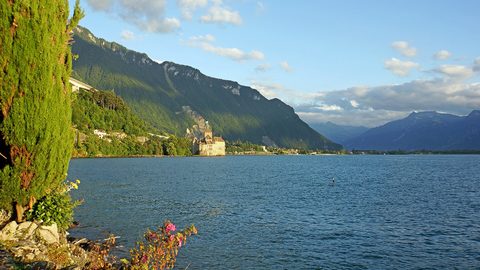 Switzerland Hotels Hostels and Mountain Huts What Each Is Actually Like
Swiss accommodation spans CHF 50 hostel dorms to five-star Zermatt resorts—learn what a mountain hut stay actually involves, what half-board means and where families get the best value.
Switzerland Hotels Hostels and Mountain Huts What Each Is Actually Like
Swiss accommodation spans CHF 50 hostel dorms to five-star Zermatt resorts—learn what a mountain hut stay actually involves, what half-board means and where families get the best value.
-
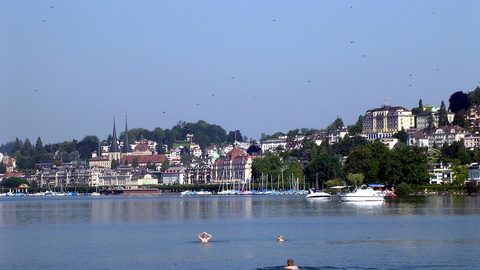 Switzerland Where to Stay Choosing Your Base for Mountains and Cities
Choose two or three Swiss bases maximum to avoid wasting half-days on mountain transfers—compare Wengen, Lucerne, Zermatt, Grindelwald and Interlaken for families, hikers and first-time visitors.
Switzerland Where to Stay Choosing Your Base for Mountains and Cities
Choose two or three Swiss bases maximum to avoid wasting half-days on mountain transfers—compare Wengen, Lucerne, Zermatt, Grindelwald and Interlaken for families, hikers and first-time visitors.
-
 Switzerland Flights from Hong Kong Direct and Connecting Options Compared
Direct Cathay Pacific and Swiss flights from Hong Kong to Zurich take 12 hours 40 minutes, while Geneva requires a connection—compare fares, seasons and what each route costs in HKD.
Switzerland Flights from Hong Kong Direct and Connecting Options Compared
Direct Cathay Pacific and Swiss flights from Hong Kong to Zurich take 12 hours 40 minutes, while Geneva requires a connection—compare fares, seasons and what each route costs in HKD.
-
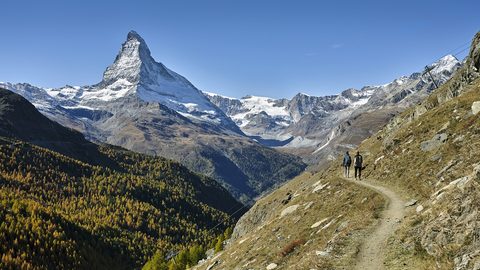 Top Destinations in Switzerland: A Tour of the Must-See Places
Switzerland may be small, but every corner has its own character, from cosmopolitan lakeside cities to car-free mountain villages and Italian-flavoured southern towns. This tour runs through the destinations most Hong Kong travellers put at the top of their list, with a sense of what each offers and
Top Destinations in Switzerland: A Tour of the Must-See Places
Switzerland may be small, but every corner has its own character, from cosmopolitan lakeside cities to car-free mountain villages and Italian-flavoured southern towns. This tour runs through the destinations most Hong Kong travellers put at the top of their list, with a sense of what each offers and
-
 Switzerland in Winter vs Summer: Which Season Should You Choose?
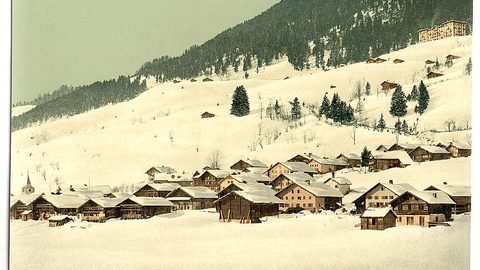
Switzerland is one of those rare destinations that reinvents itself completely with the turning of the seasons. Visit in January and you find a hushed, snow-blanketed wonderland of ski slopes and steaming mountain restaurants. Return in July and the same valleys are green and buzzing, laced with wil
Switzerland in Winter vs Summer: Which Season Should You Choose?
Switzerland is one of those rare destinations that reinvents itself completely with the turning of the seasons. Visit in January and you find a hushed, snow-blanketed wonderland of ski slopes and steaming mountain restaurants. Return in July and the same valleys are green and buzzing, laced with wil
-
 Bern
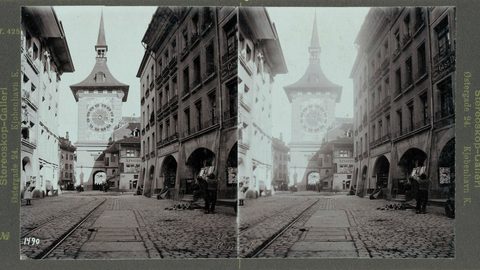
Bern is the Swiss capital most first-time itineraries skip. The UNESCO arcades, river bears, and 56-minute Zurich train make it the best rain-day city in Switzerland.
Bern
Bern is the Swiss capital most first-time itineraries skip. The UNESCO arcades, river bears, and 56-minute Zurich train make it the best rain-day city in Switzerland.
-
 Lucerne or Interlaken Where to Put Your One Mountain Base
-
 Swiss Travel Pass or Half Fare Card Which Pays for Your Trip
Swiss Travel Pass or Half Fare Card? This cost comparison for Hong Kong travellers breaks down which pass pays for itself on mountain railways, lake boats, and intercity trains.
Swiss Travel Pass or Half Fare Card Which Pays for Your Trip
Swiss Travel Pass or Half Fare Card? This cost comparison for Hong Kong travellers breaks down which pass pays for itself on mountain railways, lake boats, and intercity trains.